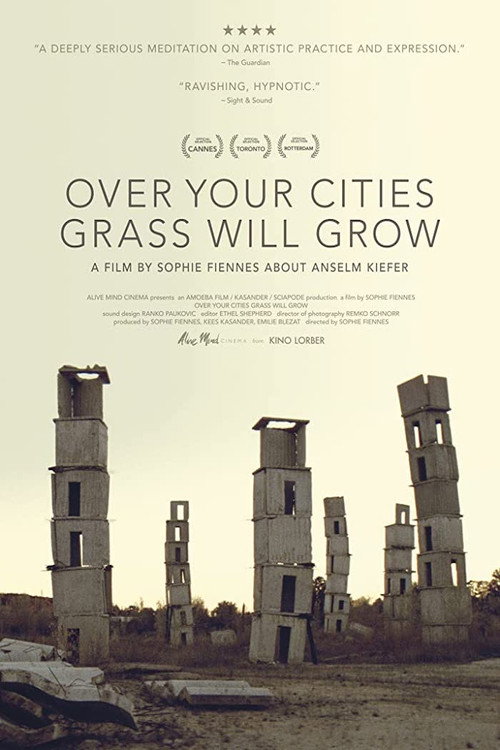
Over Your Cities Grass Will Grow 2011
Sophie Fiennes' visually arresting documentary *Over Your Cities Grass Will Grow* (2011) immerses viewers in the sprawling, mythic world of German artist Anselm Kiefer at his remote hill-studio in the South of France.
Director: Sophie Fiennes
Cast
Frequently Asked Questions
What is Over Your Cities Grass Will Grow (2011) about?
This documentary delves into the creative process of German artist Anselm Kiefer, showcasing his monumental works and the sprawling studio estate where he crafts his haunting, lead-encrusted artworks. The film blends intimate footage of Kiefer's techniques with sweeping views of his property, revealing how his art grapples with history, memory, and renewal.
Who directed Over Your Cities Grass Will Grow?
Sophie Fiennes directed the film, known for her dynamic collaborations with artists like Anselm Kiefer and the Chapman Brothers.
Who stars in Over Your Cities Grass Will Grow?
The documentary centers on acclaimed German artist Anselm Kiefer, whose work and creative process are the film's focal point.
Is Over Your Cities Grass Will Grow (2011) worth watching?
While not a mainstream release, this documentary offers a rare glimpse into the mind of one of contemporary art's most provocative figures. Fans of immersive, visually driven films—and Kiefer's oeuvre—will find it deeply rewarding. Its contemplative pace demands patience but rewards with a meditative, almost spiritual experience.
How long is Over Your Cities Grass Will Grow?
The film runs for 105 minutes.
🎥 Trailer
About Over Your Cities Grass Will Grow (2011) — Sophie Fiennes' Cinematic Journey into Anselm Kiefer's Artistic Universe
Sophie Fiennes' visually arresting documentary *Over Your Cities Grass Will Grow* (2011) immerses viewers in the sprawling, mythic world of German artist Anselm Kiefer at his remote hill-studio in the South of France. For 105 minutes, the film traces Kiefer's alchemical creative rituals—layering paint, burning lead, and constructing massive, haunting installations—as it distills his lifelong exploration of memory, destruction, and rebirth. The estate itself becomes a character, its cavernous ateliers and overgrown gardens mirroring the artist's turbulent inner landscape. Fiennes' lens captures the raw, elemental power of Kiefer's work, transforming industrial-scale canvases and lead-shrouded sculptures into a meditative journey through history's shadows. The result is less a traditional documentary than a hypnotic, poetic excavation of art as both wound and healing.
This is a film for those who see cinema as a portal to universal themes—where the weight of the past collides with the tenacity of creation. Kiefer's uncompromising vision, paired with Fiennes' mesmerizing compositions, invites audiences to confront the murky depths of human experience through the transformative act of making. It's a rare cinematic experience that lingers long after the credits roll, a testament to art's ability to both bury and resurrect.