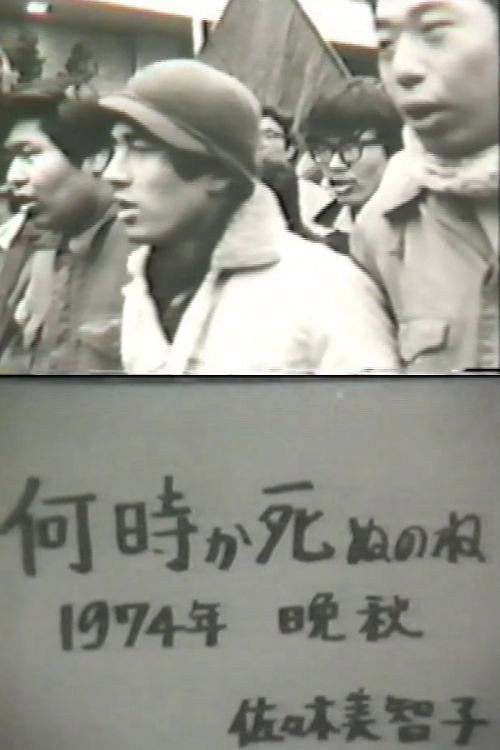
To Die Sometime 1974
Dive into the raw energy of 1970s Japan with *To Die Sometime (1974)*, a gripping documentary crafted by director Michiko Sasaki.
Director: Michiko Sasaki
Frequently Asked Questions
What is *To Die Sometime (1974)* about?
*To Die Sometime* immerses viewers in the tumultuous protests of Japan's Nihon University, blending photographs and film fragments to document the All-Campus Joint Struggle Committee's fight against authority. It's a visceral snapshot of student activism, where the personal and political collide in a charged atmosphere.
Who directed *To Die Sometime*?
The film was directed by Michiko Sasaki, a filmmaker whose work often explores social and political themes through intimate, observational techniques.
Who stars in *To Die Sometime*?
Cast details for *To Die Sometime* are not publicly listed, as the film focuses primarily on real-life events and participants rather than traditional actors.
Is *To Die Sometime (1974)* worth watching?
As a documentary, *To Die Sometime* offers a rare and unfiltered look at 1970s student activism in Japan, making it a compelling watch for history and film enthusiasts. Its brevity and intensity add to its appeal, though it may not appeal to those seeking polished storytelling.
How long is *To Die Sometime*?
The film runs for approximately 30 minutes.
About To Die Sometime (1974) — A Gripping 1970s Japanese Student Protest Documentary
Dive into the raw energy of 1970s Japan with *To Die Sometime (1974)*, a gripping documentary crafted by director Michiko Sasaki. This 30-minute film diary isn't just a historical record—it's a visceral snapshot of the student protests at Nihon University, where everyday life collided with political upheaval. Through a striking blend of still photographs and fleeting film fragments, Sasaki captures the tension, chaos, and humanity of the Nichidai Zenkyōtō struggle, offering an unfiltered glimpse into a pivotal moment in Japanese activism.
More than a chronicle of unrest, *To Die Sometime (1974)* weaves personal and political threads together, painting a portrait of resistance that feels both intimate and urgent. The film's atmosphere crackles with the urgency of its era, blending the mundane with the extraordinary to create a time capsule of defiance and camaraderie. Whether you're a history buff or a documentary enthusiast, this short but impactful work leaves a lasting impression.