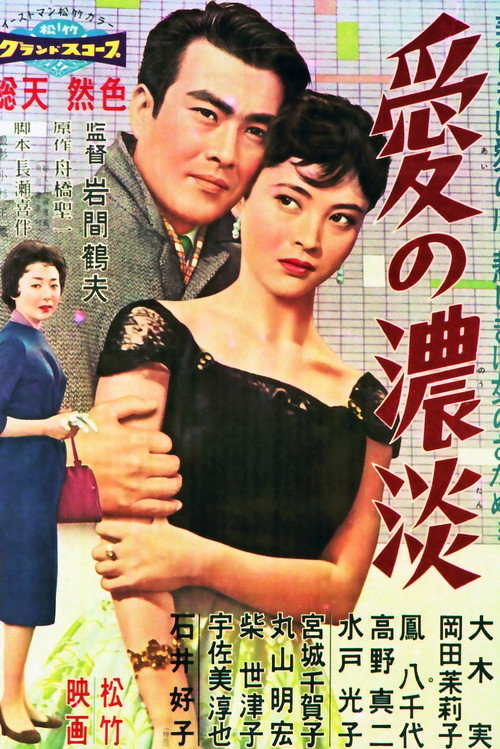
Ai no Noutan 1959
Discover *Ai no Noutan (1959)*, a compelling drama directed by Tsuruo Iwama that captures the emotional intensity of post-war Japan.
Director: Tsuruo Iwama
Cast






Frequently Asked Questions
What is Ai no Noutan (1959) about?
*Ai no Noutan (1959)* follows the intertwined lives of women in a rural Japanese community, where personal ambitions and societal pressures create a web of emotional challenges. The film delves into how love and loyalty are tested when tradition clashes with the changing tides of modernity.
Who directed Ai no Noutan?
Ai no Noutan (1959) was directed by Tsuruo Iwama, a filmmaker known for his sensitive portrayal of human relationships in post-war Japan.
Who stars in Ai no Noutan?
The film features Mariko Okada, Yachiyo Ōtori, Minoru Ōki, Mitsuko Mito, and Shinji Takano in pivotal roles.
Is Ai no Noutan (1959) worth watching?
While *Ai no Noutan (1959)* may not be widely celebrated, its intimate drama and rich themes make it a hidden gem for fans of vintage Japanese cinema. The film's emotional depth and atmospheric storytelling offer a rewarding experience for those exploring classic films.
How long is Ai no Noutan?
Ai no Noutan (1959) has a runtime of 91 minutes.
About Ai no Noutan (1959) — A 1950s Japanese Drama of Love and Sacrifice
Discover *Ai no Noutan (1959)*, a compelling drama directed by Tsuruo Iwama that captures the emotional intensity of post-war Japan. This 91-minute film unfolds against a backdrop of social change, exploring themes of love, sacrifice, and the delicate balance between tradition and modernity. With Mariko Okada and Yachiyo Ōtori leading a stellar cast, the movie weaves a poignant narrative about relationships tested by circumstance and the quiet strength of women in a transforming society.
Set in a rural village, *Ai no Noutan (1959)* immerses viewers in a world where personal desires often collide with societal expectations. The film's atmospheric storytelling highlights the contrast between urban ambition and rustic simplicity, creating a visually striking and emotionally resonant experience. Though largely overlooked in global cinema history, this work remains a testament to Iwama's directorial prowess and the timeless power of Japanese drama.