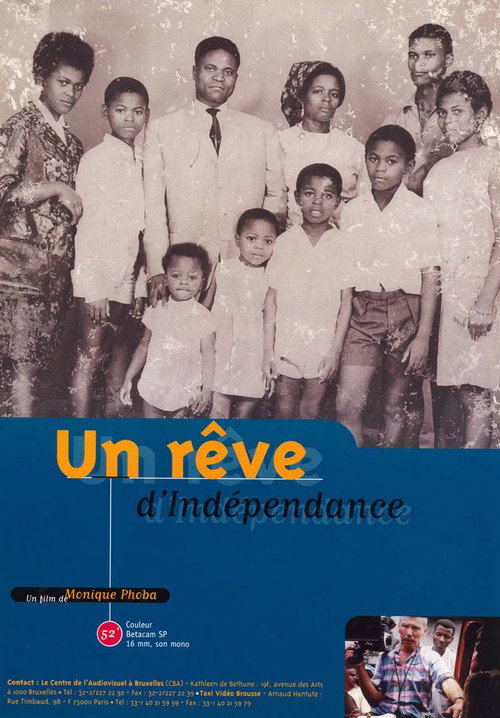
Un rêve d'indépendance 1998
In 'Un rêve d'indépendance (1998)', Congolese filmmaker Monique Mbeka Phoba embarks on a poignant journey through time, uncovering a forgotten chapter of history tied to her family.
Director: Monique Mbeka Phoba
Frequently Asked Questions
What is Un rêve d'indépendance (1998) about?
This documentary follows a Congolese filmmaker as she traces her grandfather's life as a medical assistant, a role created during Belgian colonization. The film reveals how this profession was integral to Congo's history, only to be forgotten by both colonizers and the Congolese people alike.
Who directed Un rêve d'indépendance?
The film was directed by Monique Mbeka Phoba, a Congolese filmmaker known for her work that blends personal stories with historical and political themes.
Who stars in Un rêve d'indépendance?
The documentary centers on Monique Mbeka Phoba and her late grandfather, who served as a medical assistant before becoming a doctor. The cast includes family members and historical figures tied to Congo's colonial and post-colonial eras.
Is Un rêve d'indépendance (1998) worth watching?
Though unrated on IMDb, the film is a compelling watch for anyone interested in African history, colonial legacies, or documentaries that explore forgotten narratives. Its intimate yet informative approach makes it both educational and emotionally engaging.
How long is Un rêve d'indépendance?
The runtime of 'Un rêve d'indépendance' is 52 minutes.
About Un rêve d'indépendance (1998) — How a forgotten role shaped Congo's independence
In 'Un rêve d'indépendance (1998)', Congolese filmmaker Monique Mbeka Phoba embarks on a poignant journey through time, uncovering a forgotten chapter of history tied to her family. The documentary sheds light on the forgotten legacy of medical assistants in Congo, a role created during Belgian colonization that has since faded from memory on both sides of the colonial divide. Through her late grandfather's story—once a medical assistant who became a doctor—Phoba weaves together 37 years of Congo's path to independence, blending personal history with the broader social and political landscape of the era.
The film exudes a reflective, almost intimate atmosphere, where archival footage and family recollections merge to restore a slice of Congolese identity. It's a stirring exploration of how collective memory fades when not actively preserved, and how one individual's life can reflect the larger struggles of a nation. For those interested in African history, colonial legacies, or documentaries that bridge personal and political narratives, 'Un rêve d'indépendance' offers both depth and emotional resonance.