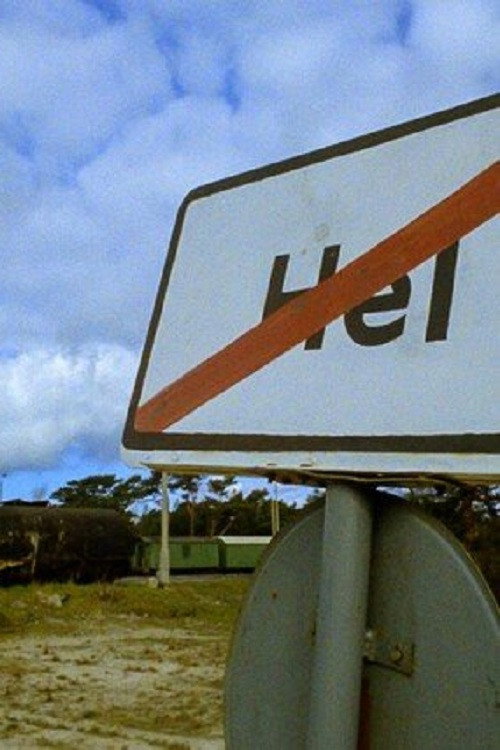
End of Poland 1990
Dive into the hauntingly poetic world of *End of Poland (1990)*, Zbigniew Kowalewski's stark documentary capturing the Hel Peninsula's fragile struggle against the encroaching sea.
Director: Zbigniew Kowalewski
Frequently Asked Questions
What is End of Poland (1990) about?
*End of Poland* follows the Hel Peninsula as relentless waves slowly erase its shoreline, a crisis intensified by decades of poor environmental decisions. Director Zbigniew Kowalewski frames this slow disappearance as a metaphor for Poland's post-communist identity, where the land's erosion reflects the nation's fragile recovery and unhealed divides.
Who directed End of Poland?
The film was helmed by Zbigniew Kowalewski, a Polish documentarian known for exploring environmental and societal themes in short-form cinema.
Who stars in End of Poland?
As a documentary, *End of Poland* features no traditional cast; it focuses instead on landscapes, structures, and voices of local residents and experts reflecting on the peninsula's decline.
Is End of Poland (1990) worth watching?
Though unrated and short in length, *End of Poland* offers a compelling snapshot of environmental and historical resonance. Its poetic urgency and symbolic depth make it a poignant watch for fans of documentary cinema and Polish history, especially those interested in ecological storytelling.
How long is End of Poland?
The runtime of *End of Poland* is 28 minutes.
About End of Poland (1990) — A Coastal Erosion Metaphor for Post-Communist Poland
Dive into the hauntingly poetic world of *End of Poland (1990)*, Zbigniew Kowalewski's stark documentary capturing the Hel Peninsula's fragile struggle against the encroaching sea. More than just a film about geography, this 28-minute short becomes a mirror to Poland's turbulent post-communist era, where human mismanagement and environmental neglect mirror the nation's own fractures. Through evocative visuals and quiet urgency, the documentary transforms a disappearing stretch of land into a symbol of irreversible change, blending environmental alarm with historical reflection.
The atmosphere is one of quiet desperation—waves erode the shore, structures collapse, and the land itself seems to dissolve. Kowalewski crafts a meditation on loss, legacy, and the unintended consequences of progress, all unfolding under the shadow of political transformation. Neither a dry report nor a partisan polemic, *End of Poland (1990)* offers a poetic yet piercing glimpse into a moment when both land and nation were at a crossroads.