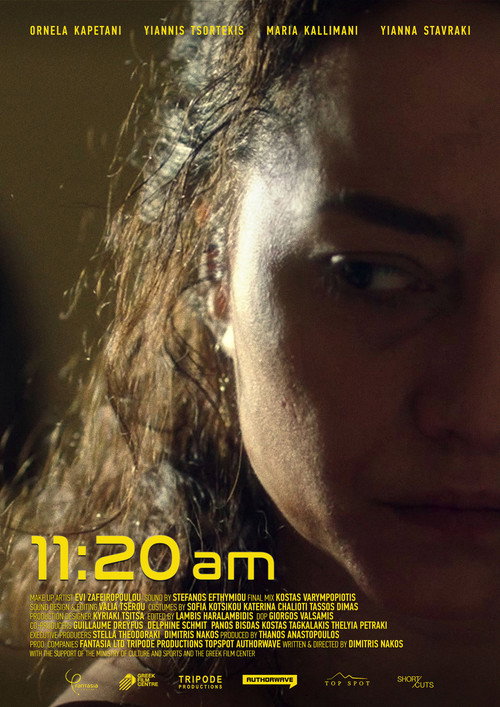
11.20 a.m. 2022
Dimitris Nakos' gripping micro-drama *11.20 a.m.* (2022) plunges viewers into the tense, locked-in atmosphere of a domestic worker's fateful morning in Athens.
Director: Dimitris Nakos
Cast



Frequently Asked Questions
What is 11.20 a.m. (2022) about?
*11.20 a.m.* follows Olga, a dedicated Albanian domestic worker in Athens, who unexpectedly finds herself alone in her employer's home at the same time a crucial event is about to unfold. The film turns a quiet morning into a high-stakes crossroads where split-second decisions could change everything.
Who directed 11.20 a.m.?
Dimitris Nakos, a director celebrated for his intimate and socially resonant films, helms *11.20 a.m.* with a sharp, atmospheric touch.
Who stars in 11.20 a.m.?
The film features Ornela Kapetani, Maria Kallimani, Yannis Tsortekis, and Gianna Stavraki in key roles that shape its emotional core.
Is 11.20 a.m. (2022) worth watching?
While short, *11.20 a.m.* packs a punch with its suspenseful premise and strong performances. It's a thought-provoking slice of drama that rewards viewers looking for emotional depth over spectacle. Perfect for a quick but impactful watch.
How long is 11.20 a.m.?
The film runs for 14 minutes.
🎥 Trailer
About 11.20 a.m. (2022) — A Micro-Drama of Fate and Uncertainty in Modern Greece
Dimitris Nakos' gripping micro-drama *11.20 a.m.* (2022) plunges viewers into the tense, locked-in atmosphere of a domestic worker's fateful morning in Athens. When Olga, a hardworking Albanian immigrant, finds herself alone in the upscale home she tends, the clock ticks toward a collision of chance and consequence. As the morning light spills through the windows, the film crafts a suspenseful tableau where every second feels loaded with unseen tension—will this be Olga's moment of opportunity or her undoing?
Nakos, known for his keen eye on human drama, delivers a story that lingers long after the credits roll. With a runtime tight enough to feel like a heartbeat, *11.20 a.m.* explores themes of vulnerability, class, and the fragile balance of trust in unseen corners of society. The minimalist setting amplifies the raw emotion, leaving audiences to grapple with the question: was Olga in the right place at the right time—or the worst?