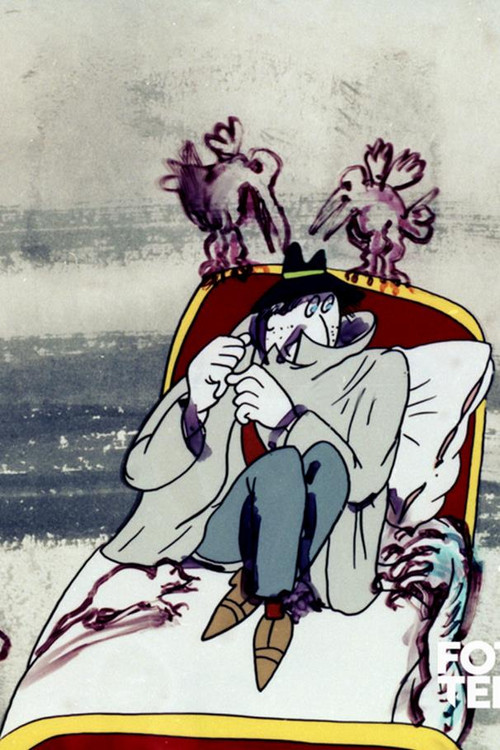
Tratwa 1986
Dive into the hypnotic world of *Tratwa (1986)*, a mesmerizing three-minute animated short that blends surreal imagery with deep emotional undertones.
Director: Bogdan Nowicki
Frequently Asked Questions
What is Tratwa (1986) about?
*Tratwa* (1986) is a short animated film that unfolds like a poetic dream, following a solitary figure navigating a world of shifting realities. Its narrative is subtle, relying on visual storytelling to evoke themes of isolation and inner strength, leaving audiences to interpret its deeper meaning.
Who directed Tratwa?
Bogdan Nowicki directed *Tratwa* (1986), bringing his distinctive artistic vision to this brief but impactful animated short.
Who stars in Tratwa?
Cast details for *Tratwa* (1986) are not publicly listed, as it is an animated film without credited voice actors or performers.
Is Tratwa (1986) worth watching?
*Tratwa* (1986) may be a short film, but its artistic ambition and emotional depth make it compelling for fans of animation and surreal storytelling. While brief, its impact lingers, offering a unique experience that rewards attentive viewers.
How long is Tratwa?
The runtime for *Tratwa* (1986) is 3 minutes.
About Tratwa (1986) — A mesmerizing 3-minute animated journey into surreal and emotional storytelling
Dive into the hypnotic world of *Tratwa (1986)*, a mesmerizing three-minute animated short that blends surreal imagery with deep emotional undertones. Directed by the visionary Bogdan Nowicki, this Polish masterpiece invites viewers into a dreamlike narrative where the boundaries between reality and fantasy dissolve. The film's minimalist yet evocative style creates an atmosphere of quiet intensity, exploring themes of isolation, resilience, and the human spirit's capacity to endure. With its striking visuals and subtle storytelling, *Tratwa* (1986) stands as a testament to the power of animation as a medium for profound artistic expression.
Beneath its deceptively simple premise, *Tratwa* carries layers of meaning, making it a work that lingers in the mind long after the credits roll. The film's haunting beauty lies in its ability to convey complex emotions through minimal dialogue and striking visuals, appealing to both casual viewers and dedicated cinephiles. Whether you're drawn to its aesthetic charm or its deeper philosophical questions, *Tratwa* (1986) offers a unique cinematic experience that's as thought-provoking as it is visually stunning.