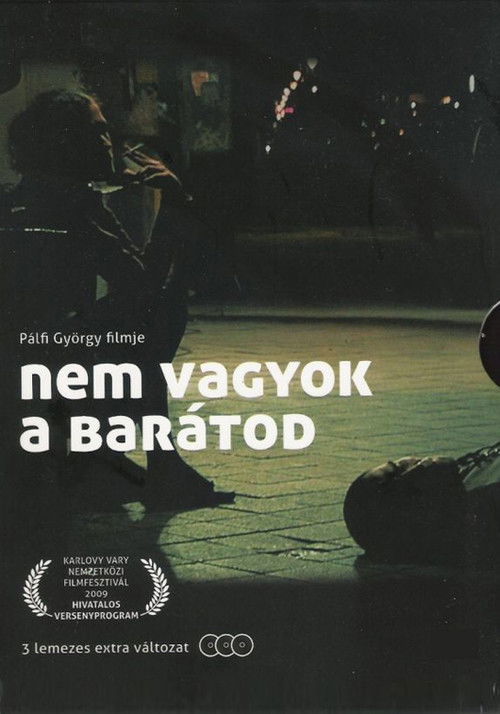
I Am Not Your Friend 2009
I Am Not Your Friend (2009) is a raw, atmospheric drama directed by György Pálfi that unfolds like a spontaneous jazz improvisation.
Director: György Pálfi
Cast



Frequently Asked Questions
What is I Am Not Your Friend (2009) about?
The film follows a group of Budapest residents in January 2008 as their lives unfold unexpectedly during a 20-day shoot. Without a traditional script, the story evolves through improvisation, focusing on their spontaneous reactions and interactions. The narrative takes a backseat to the raw, immersive energy of the city and its people.
Who directed I Am Not Your Friend?
I Am Not Your Friend was directed by György Pálfi, a filmmaker known for blending experimental techniques with intimate storytelling.
Who stars in I Am Not Your Friend?
The film features István Szülek and Gyöngyvér Országh in leading roles, supported by Corbisier Kim, Csaba Czene, and Hermina Fátyol.
Is I Am Not Your Friend (2009) worth watching?
If you appreciate unconventional, character-driven dramas that prioritize atmosphere over plot, I Am Not Your Friend is worth your time. Its improvisational style offers a unique, almost voyeuristic glimpse into real-life interactions, making it a standout for fans of Hungarian cinema and raw storytelling.
How long is I Am Not Your Friend?
I Am Not Your Friend has a runtime of 100 minutes.
About I Am Not Your Friend (2009) — A Raw, Improvised Drama from Budapest
I Am Not Your Friend (2009) is a raw, atmospheric drama directed by György Pálfi that unfolds like a spontaneous jazz improvisation. The film captures a slice of Budapest in January 2008, where nine amateur actors and the filmmaking team worked without a traditional script, allowing the story to evolve organically over 20 days of shooting. What emerges isn't just a narrative but a vivid, almost documentary-like immersion into the emotions and lives of its characters, each reacting to the unpredictable energy of the moment.
Stripped of pretenses, the film prioritizes authenticity over polished storytelling, with Pálfi guiding the process rather than controlling it. István Szülek and Gyöngyvér Országh lead the ensemble in a portrayal of human connection and disconnection, weaving themes of isolation, spontaneity, and the fleeting nature of moments. The result is a cinematic experience that feels alive, almost like eavesdropping on real lives caught in the hustle of a winter city.