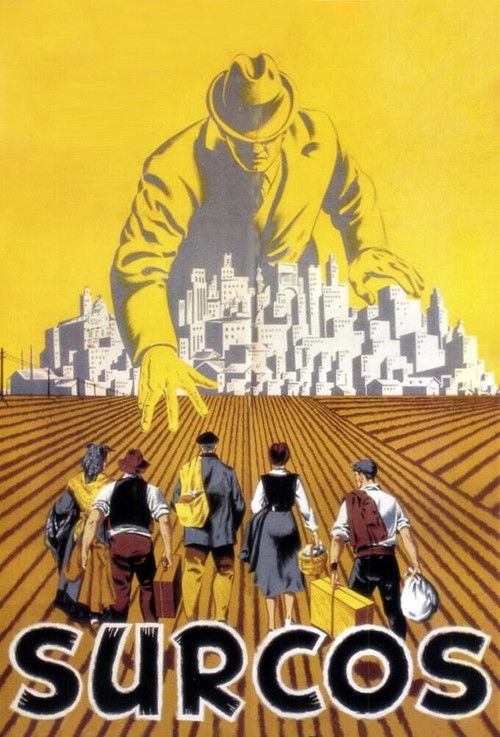
Surcos 1951
José Antonio Nieves Conde's *Surcos (1951)* plunges audiences into post-civil war Spain with raw intensity, following a struggling farm family uprooted by hardship and drawn to the moral decay of Madrid.
Director: José Antonio Nieves Conde
Cast









Frequently Asked Questions
What is Surcos (1951) about?
Surcos (1951) follows a farm family displaced by hardship who relocate to Madrid at the close of the Spanish Civil War, only to confront a city rife with illegality and moral decay. Their struggle for decency and stability unfolds against a backdrop of societal fracture, where every opportunity seems shadowed by exploitation.
Who directed Surcos?
Surcos was directed by José Antonio Nieves Conde, a filmmaker known for his ability to capture social realism through cinema.
Who stars in Surcos?
The film stars María Asquerino, Luis Peña, and Marisa de Leza as the central family navigating Madrid's underbelly.
Is Surcos (1951) worth watching?
For fans of vintage drama that doesn't shy away from grim themes, Surcos (1951) is a compelling watch. Its unflinching portrayal of post-war struggle and moral ambiguity makes it a standout in Spanish cinema. While not for those seeking light entertainment, its historical and thematic depth rewards attentive viewers.
How long is Surcos?
Surcos (1951) has a runtime of 99 minutes.
About Surcos (1951) — A Post-War Drama of Survival and Moral Collapse
José Antonio Nieves Conde's *Surcos (1951)* plunges audiences into post-civil war Spain with raw intensity, following a struggling farm family uprooted by hardship and drawn to the moral decay of Madrid. Cast out of their rural life, they seek refuge with a relative in the city, only to find themselves navigating a labyrinth of illegality and corruption at every turn. This gripping drama exposes the harsh realities of displacement, where survival often clashes with dignity, and trust is as scarce as opportunity. The film's stark black-and-white visuals and unflinching narrative weave a tale of disillusionment, where the promise of a fresh start curdles into a struggle for even the most basic decency.
As the family grapples with poverty and exploitation, *Surcos* becomes more than a story of relocation—it's a searing critique of societal fracture in a nation still reeling from conflict. The absence of easy answers and the relentless descent into moral ambiguity give the film an atmosphere of quiet desperation, elevating it beyond mere drama into a haunting reflection on humanity's resilience and vulnerability. For those drawn to cinema that challenges rather than comforts, this 1951 classic offers a unforgettable journey into the heart of a city—and a society—on the brink.