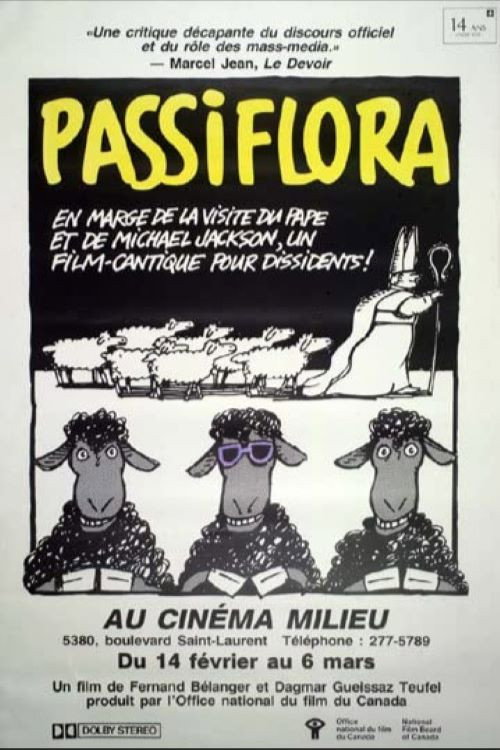
Passiflora 1986
Passiflora (1986), a thought-provoking documentary by Fernand Bélanger, delves into the world of media manipulation and mass control.
Director: Fernand Bélanger
Frequently Asked Questions
What is Passiflora (1986) about?
This documentary explores the intersection of media, power, and society, featuring a unique blend of animation, new music, street theater, and dramatization.
Who directed Passiflora?
Fernand Bélanger directed Passiflora (1986), a thought-provoking documentary that challenges the status quo.
Who stars in Passiflora?
Unfortunately, the main cast of Passiflora (1986) is not listed.
Is Passiflora (1986) worth watching?
While the IMDb rating is unavailable, Passiflora (1986) is a visually stunning and intellectually stimulating documentary that explores important themes, making it a worthwhile watch for those interested in media studies and social commentary.
How long is Passiflora?
Passiflora (1986) has a runtime of 85 minutes.
About Passiflora (1986) — A Bold Documentary on Media Manipulation
Passiflora (1986), a thought-provoking documentary by Fernand Bélanger, delves into the world of media manipulation and mass control. The film, named after the tropical flower, Passiflora, builds on the director's observations of the Pope and Michael Jackson's simultaneous visits to Montreal in 1984. This bold 'graffiti' essay, featuring animation, new music, street theater, and dramatization, celebrates the resistance shown by a coalition of individuals who dare to challenge the status quo. With its unique blend of art and social commentary, Passiflora (1986) is a must-watch for those interested in exploring the intersection of media, power, and society. Bélanger's documentary masterfully weaves together these themes, creating a visually stunning and intellectually stimulating experience. As the film's narrative unfolds, viewers are encouraged to question the nature of control and the ways in which the media shape our perceptions. Passiflora (1986) is a powerful commentary on the human condition, inviting us to reflect on our role within the world of mass media.