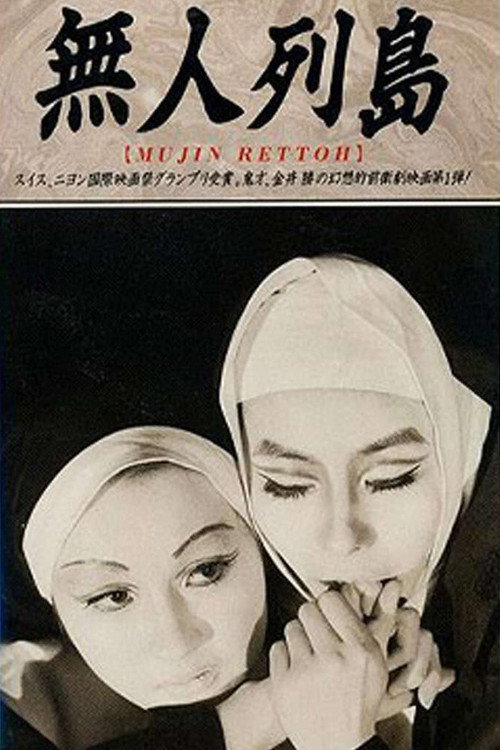
The Deserted Archipelago 1969
Katsu Kanai's *The Deserted Archipelago* (1969) is a haunting drama that follows a young man emerging from the oppressive confines of a nunnery, only to find the outside world a far more terrifying place.
Director: Katsu Kanai
Cast





Frequently Asked Questions
What is *The Deserted Archipelago* (1969) about?
The film follows a young man who flees the harsh discipline of a nunnery, only to confront a world that feels even more menacing. It's a poignant exploration of trauma, adolescence, and the fear of stepping into the unknown.
Who directed *The Deserted Archipelago*?
Katsu Kanai directed this gripping drama, bringing a keen eye for emotional tension and stark visual storytelling.
Who stars in *The Deserted Archipelago*?
The film features Kazuko Aoki, Ben Hiura, Shin'ichi Iwata, Yoshihiro Kato, and Kazuyoshi Kushida in key roles.
Is *The Deserted Archipelago* (1969) worth watching?
While it's a niche work with no IMDb rating to gauge popularity, its thematic depth and atmospheric tension make it a rewarding watch for fans of introspective 1960s drama. The short runtime is a plus for those seeking a concise yet impactful film.
How long is *The Deserted Archipelago*?
The film runs for 56 minutes.
About The Deserted Archipelago (1969) — A harrowing coming-of-age drama by Katsu Kanai
Katsu Kanai's *The Deserted Archipelago* (1969) is a haunting drama that follows a young man emerging from the oppressive confines of a nunnery, only to find the outside world a far more terrifying place. This stark, introspective film explores themes of isolation, fear, and the painful transition into adulthood, wrapped in an atmosphere of quiet dread and existential unease.
With a runtime of just 56 minutes, Kanai crafts a powerful narrative that lingers long after the credits roll, making it a cult favorite among fans of 1960s Japanese drama. The film stars Kazuko Aoki, Ben Hiura, and Shin'ichi Iwata, whose performances anchor the story in raw emotional authenticity. The contrast between the rigid sanctuary of the nunnery and the chaotic unpredictability of the world beyond serves as a metaphor for the universal struggle to find one's place in an unwelcoming society.