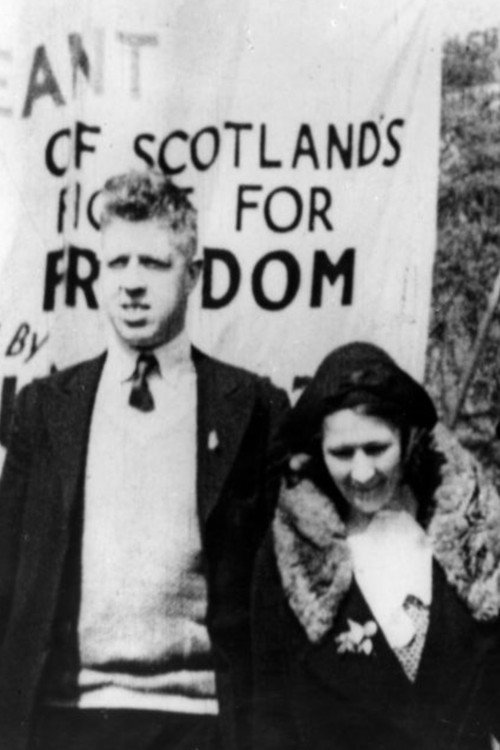
Challenge to Fascism: Glasgow's May Day 1938
Captured in vivid black-and-white, *Challenge to Fascism: Glasgow's May Day (1938)* documents a defiant moment in history when students, workers, and politicians marched together to oppose rising fascism in Europe.
Director: Helen Biggar
Frequently Asked Questions
What is *Challenge to Fascism: Glasgow's May Day* (1938) about?
The film captures the preparations and execution of Glasgow's 1938 May Day March, highlighting the diverse participation of students, workers, and politicians united against fascism. More than just a parade, it's a snapshot of collective defiance during a time of global political unrest.
Who directed *Challenge to Fascism: Glasgow's May Day*?
The film was directed by Helen Biggar, a pioneering filmmaker and artist known for her politically engaged work during the 1930s and 1940s.
Who stars in *Challenge to Fascism: Glasgow's May Day*?
Director information is not available.
Is *Challenge to Fascism: Glasgow's May Day* (1938) worth watching?
As a historical documentary, it's a fascinating piece of political cinema that offers insight into grassroots activism in pre-war Britain. While its brevity limits depth, its historical significance and emotional resonance make it compelling for viewers interested in social history or film preservation.
How long is *Challenge to Fascism: Glasgow's May Day*?
The documentary runs for approximately 7 minutes.
About Challenge to Fascism: Glasgow's May Day (1938) — The short film that captured Glasgow's anti-fascist spirit in 1938
Captured in vivid black-and-white, *Challenge to Fascism: Glasgow's May Day (1938)* documents a defiant moment in history when students, workers, and politicians marched together to oppose rising fascism in Europe. Directed by Helen Biggar, this seven-minute documentary pulses with the energy of unity and resistance, transforming a routine May Day procession into a powerful political statement. The film doesn't just show a march—it captures the spirit of collective action, contrasting the hopeful chants of solidarity with the looming shadows of authoritarianism across the continent.
This short but impactful documentary blends documentary realism with a clear moral urgency, offering a rare glimpse into grassroots activism during a pivotal era. Without relying on dramatic staging, Biggar's camera lens preserves the raw emotion of the crowd, from hopeful faces to clenched fists, all marching under banners that read 'No Pasaran'—a testament to the era's unyielding opposition to tyranny. It's both a historical artifact and a stirring reminder of art's role in social change.