Jaracz's Testament 1945
Jerzy Bossak's *Jaracz's Testament (1945)* is a haunting six-minute documentary that captures a pivotal moment in Polish cinema history.
Director: Jerzy Bossak
Frequently Asked Questions
What is Jaracz's Testament (1945) about?
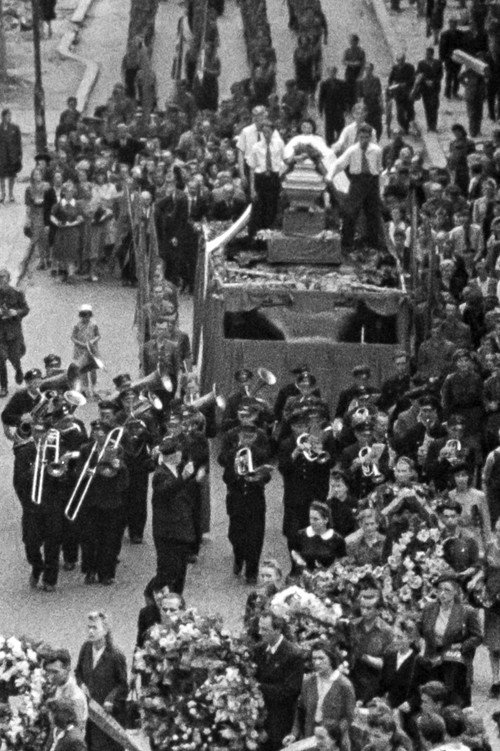
*Jaracz's Testament* is a brief but profound documentary that juxtaposes Stefan Jaracz's final letter to fellow artists with footage from his funeral and his acclaimed pre-war film. The project serves as a tribute to his enduring influence on Polish cinema and culture.
Who directed Jaracz's Testament?
The film was directed by Jerzy Bossak, a celebrated figure in Polish documentary filmmaking known for his intimate and historically rich narratives.
Who stars in Jaracz's Testament?
The documentary primarily features Stefan Jaracz, a legendary actor of the era. Exact cast details beyond Jaracz are not listed.
Is Jaracz's Testament (1945) worth watching?
While *Jaracz's Testament* is brief, its historical and emotional weight makes it compelling for fans of classic cinema and documentary films. Its rarity and focus on a pivotal cultural figure add to its significance.
How long is Jaracz's Testament?
The film runs for 6 minutes.
About Jaracz's Testament (1945) — A Short but Stunning Tribute to Stefan Jaracz
Jerzy Bossak's *Jaracz's Testament (1945)* is a haunting six-minute documentary that captures a pivotal moment in Polish cinema history. The film centers on Stefan Jaracz, a beloved actor who, anticipating his impending death, penned a poignant letter to his artistic peers—a testament to his ideals and legacy. Blending excerpts from his pre-war cinematic masterpiece *His Great Love* with stark footage of his 1945 funeral, Bossak crafts a meditative tribute that lingers on themes of mortality, artistic devotion, and the fleeting nature of life. The black-and-white visuals and solemn tone evoke a sense of reverence, making it a poignant time capsule of a bygone era.
Beyond its historical significance, *Jaracz's Testament* stands as a quiet yet powerful elegy for a generation of artists lost to war. The film's sparse runtime belies its emotional depth, using Jaracz's own words to weave a narrative that feels both personal and universal. For cinephiles and historians alike, it's a rare glimpse into the intersection of art and memory, where the past is preserved in film rather than forgotten to time.