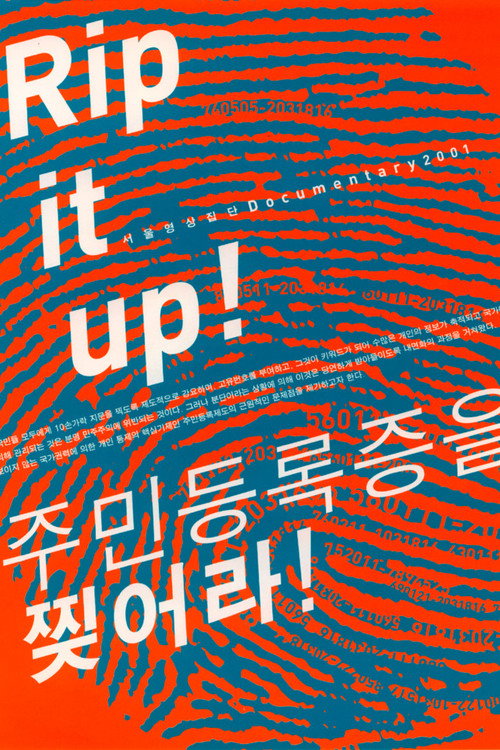
Rip It Up! 2001
Dive into the gripping documentary *Rip It Up! (2001)*, directed by Mario Lee, as it confronts one of the most controversial social policies of its time.
Director: Mario Lee
Frequently Asked Questions
What is Rip It Up! (2001) about?
*Rip It Up! (2001)* peels back the layers of Japan's resident card system, revealing how fingerprinting became a symbol of state oppression. The film follows activists, including director Mario Lee, as they expose the dehumanizing process required to 'earn' basic rights. It's a sharp critique of how bureaucracy can weaponize personal data against its own people.
Who directed Rip It Up!?
Mario Lee directed *Rip It Up! (2001)*. Known for his activism, Lee brings firsthand experience to the film, documenting the fight against Japan's fingerprinting policy from the front lines.
Who stars in Rip It Up!?
Director Mario Lee stars in *Rip It Up! (2001)* alongside fellow activists and scholars who were instrumental in the movement against the resident card system.
Is Rip It Up! (2001) worth watching?
As a documentary, *Rip It Up! (2001)* offers a rare, unfiltered look at political resistance and state overreach. While it lacks mainstream recognition, its bold subject matter and activist-driven approach make it a compelling watch for fans of socially conscious cinema. Whether it's 'worth it' depends on your interest in activism or historical policy documentaries.
How long is Rip It Up!?
The runtime of *Rip It Up! (2001)* is 50 minutes.
About Rip It Up! (2001) — The Controversial Documentary Exposing State Control
Dive into the gripping documentary *Rip It Up! (2001)*, directed by Mario Lee, as it confronts one of the most controversial social policies of its time. This 50-minute film dissects Japan's resident card system, introduced in 1968, revealing how it transformed into a tool of state control through invasive fingerprinting. Lee, an activist who joined the movement against this policy in 2000, crafts a raw and urgent exploration of power, identity, and the erosion of civil liberties. The atmosphere is tense and provocative, blending grassroots activism with stark political commentary to challenge viewers to question the true cost of 'citizenship.'
Through intimate interviews and archival footage, *Rip It Up! (2001)* exposes the dehumanizing process of fingerprinting and its role in a broader system designed to categorize and restrict. The film doesn't just critique policy—it ignites debate, making it essential viewing for anyone interested in social justice, documentary filmmaking, or the hidden mechanisms of government control. A bold, thought-provoking piece that refuses to look away.