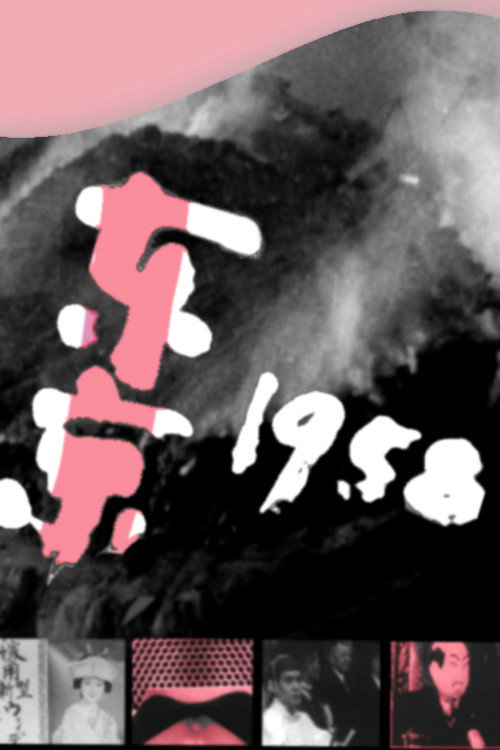
Tokyo 1958 1958
Dive into Tokyo 1958 (1958), a visually rich documentary that captures the pulse of a city on the brink of global prominence.
Director: Masahiro Ogi
Cast

Frequently Asked Questions
What is Tokyo 1958 (1958) about?
Tokyo 1958 (1958) offers a dynamic snapshot of Tokyo during a pivotal year when it was rapidly evolving into a global powerhouse. The film weaves together everyday life, cultural practices, and urban energy to paint a portrait of a city embracing change and modernity.
Who directed Tokyo 1958?
Tokyo 1958 was directed by Masahiro Ogi, a filmmaker known for blending documentary realism with creative visual storytelling.
Who stars in Tokyo 1958?
The documentary features contributions from Donald Richie alongside creative and photographic collaborators who bring Tokyo's 1950s vibrancy to life.
Is Tokyo 1958 (1958) worth watching?
Though unrated on IMDb, Tokyo 1958 is a fascinating time capsule for cinephiles and history lovers. Its concise runtime and unique blend of formats make it a standout piece of mid-century Japanese documentary filmmaking.
How long is Tokyo 1958?
Tokyo 1958 runs for approximately 24 minutes.
Tokyo 1958: A Glimpse into Post-War Tokyo's Electric Transformation — Full Movie Info
Dive into Tokyo 1958 (1958), a visually rich documentary that captures the pulse of a city on the brink of global prominence. Directed by Masahiro Ogi, this 24-minute cinematic mosaic blends striking photography, playful animation, and archival footage to document Tokyo's labor rhythms, cultural rituals, and bustling nightlife during the late 1950s. As Japan's post-war recovery ignites a renaissance of energy and ambition, the film showcases the city morphing into the world's largest metropolis—a moment frozen in time through Ogi's lens and documentary innovation.
With Donald Richie as a creative contributor, Tokyo 1958 doesn't just chronicle growth; it immerses viewers in the sensory overload of an urban awakening, where tradition meets modernity in every frame. From the glow of neon-lit streets to the quiet dignity of daily labor, this short documentary is both a time capsule and a vivid portrait of transformation—ideal for history buffs, urban explorers, and fans of cinematic storytelling.