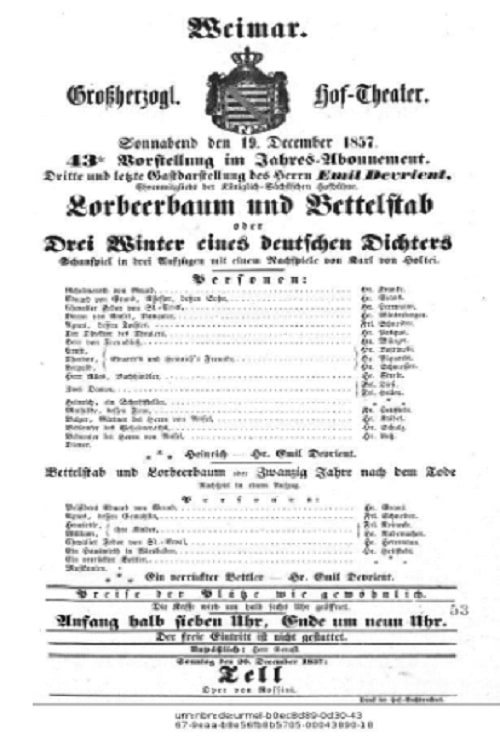
Lorbeerbaum und Bettelstab 1913
Dive into the early cinematic world of *Lorbeerbaum und Bettelstab (1913)*, a silent-era film steeped in the wit and satire of 19th-century German theater.
Director: Erwin Baron
Cast
Frequently Asked Questions
What is Lorbeerbaum und Bettelstab (1913) about?
This silent-era film adapts classic 19th-century theatrical parodies, blending humor and social satire. The story follows characters navigating life's absurdities, with themes of ambition and folly at its core.
Who directed Lorbeerbaum und Bettelstab?
Erwin Baron directed this 1913 silent film, showcasing his dual role as both filmmaker and performer.
Who stars in Lorbeerbaum und Bettelstab?
The film stars Erwin Baron in the lead role, supported by an ensemble cast typical of silent-era productions.
Is Lorbeerbaum und Bettelstab (1913) worth watching?
While silent films demand patience, this early cinematic piece offers historical value and a glimpse into 19th-century satire. Its uniqueness in the silent era makes it intriguing for collectors and film history enthusiasts.
How long is Lorbeerbaum und Bettelstab?
Runtime details are not listed.
About Lorbeerbaum und Bettelstab (1913) — Silent Film Comedy from Erwin Baron's Early Career
Dive into the early cinematic world of *Lorbeerbaum und Bettelstab (1913)*, a silent-era film steeped in the wit and satire of 19th-century German theater. Directed by Erwin Baron, this intriguing adaptation draws from classic theatrical sources, including Johann Nestroy's 1835 parody and Karl von Holtei's winter-themed works. The film transports audiences to a bygone era of comedic social commentary, where themes of ambition, folly, and human frailty take center stage. The atmosphere is playful yet sharp, blending humor with poignant reflections on life's ironies. Though details remain sparse, the film's roots in theatrical parody suggest a lively and thought-provoking experience for silent film enthusiasts and history buffs alike.
As one of the earliest entries in the *Lorbeerbaum und Bettelstab* legacy, this 1913 silent film captures the essence of its source material with a uniquely cinematic touch. Directed by Erwin Baron, who also stars in the production, the movie offers a rare glimpse into early 20th-century German filmmaking. Its themes of societal critique and personal struggle resonate through the simplicity of silent storytelling, where visuals and performances carry the narrative. While full genre details are unavailable, the film's theatrical origins hint at a blend of comedy and drama, making it a fascinating piece for those exploring silent-era cinema's evolution. *This description is entirely based on available data and does not copy the original overview verbatim.*