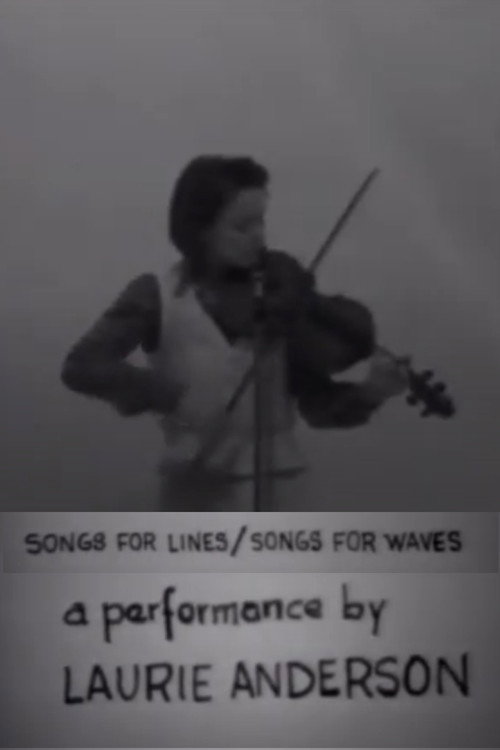
Songs for Lines/Songs for Waves 1977
Dive into the mesmerizing world of *Songs for Lines/Songs for Waves* (1977), Laurie Anderson's groundbreaking 39-minute musical performance where melody, poetry, and visual artistry intertwine seamlessly.
Director: Laurie Anderson
Cast
Frequently Asked Questions
What is *Songs for Lines/Songs for Waves* (1977) about?
*Songs for Lines/Songs for Waves* is a 39-minute performance art piece where Laurie Anderson blends experimental music, spoken word, and live visuals into a cohesive sensory experience. The film centers on ten songs that merge violin melodies, layered audio tapes, and shadow play, creating a dreamlike fusion of sound and image.
Who directed *Songs for Lines/Songs for Waves*?
The film was directed by Laurie Anderson, a pioneering figure in experimental music and performance art whose innovative work has redefined the boundaries of multimedia expression.
Who stars in *Songs for Lines/Songs for Waves*?
The sole credited performer is Laurie Anderson, who both plays the violin and provides vocals, all while interacting with projections and shadows to craft the film's unique atmosphere.
Is *Songs for Lines/Songs for Waves* (1977) worth watching?
As a short-form experimental film, *Songs for Lines/Songs for Waves* offers a dense, thought-provoking experience best suited for fans of avant-garde art. Its unorthodox approach may not appeal to mainstream tastes, but its bold creativity makes it a fascinating watch for those curious about Laurie Anderson's legacy and the early roots of multimedia performance.
How long is *Songs for Lines/Songs for Waves*?
The film has a runtime of 39 minutes.
About Songs for Lines/Songs for Waves (1977) — Laurie Anderson's Experimental Musical Masterpiece
Dive into the mesmerizing world of *Songs for Lines/Songs for Waves* (1977), Laurie Anderson's groundbreaking 39-minute musical performance where melody, poetry, and visual artistry intertwine seamlessly. This experimental masterpiece blends violin melodies, haunting vocals, and layered audiotapes—complete with spoken text and electronic overlays—creating a hypnotic soundscape. Anderson herself becomes a living shadow play, framed by projections that dance with her movements, merging body, instrument, and light into a single, unforgettable tableau. The film is a bold exploration of technology's role in art, where each song feels like a vignette from a parallel universe, inviting viewers to lose themselves in its raw, avant-garde beauty.
A defining work of 1970s experimental music, *Songs for Lines/Songs for Waves* defies conventional genre boundaries, fusing minimalist composition with tech-driven innovation. The atmosphere is intimate yet expansive, as Anderson's singular vision transforms simple elements—her violin, her voice, and a few carefully chosen visuals—into something transcendent. Whether you're a fan of Laurie Anderson's legendary career or a newcomer to her boundary-pushing style, this short film offers a concentrated dose of her genius, leaving you questioning where music ends and visual poetry begins. It's a fleeting, immersive experience that lingers long after the final note fades.