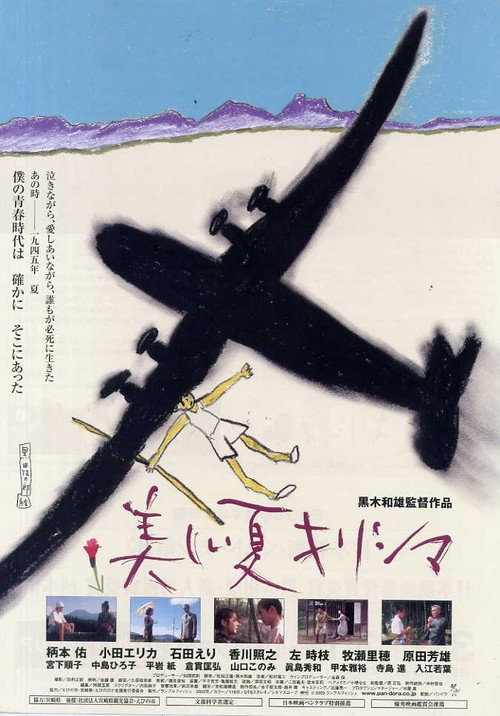
A Boy's Summer in 1945 2002
Kazuo Kuroki's contemplative wartime drama *A Boy's Summer in 1945 (2002)* transports viewers to a rural Japanese landscape on the cusp of Japan's surrender in World War II.
Director: Kazuo Kuroki
Cast









Frequently Asked Questions
What is A Boy's Summer in 1945 (2002) about?
This lyrical drama unfolds in rural Japan during the final days of World War II, focusing on villagers navigating the emotional and social upheaval as the war draws to a close. The film captures their struggles, small joys, and the bittersweet transition into a new era.
Who directed A Boy's Summer in 1945?
The film was directed by Kazuo Kuroki, a celebrated Japanese filmmaker known for his nuanced, atmospheric storytelling.
Who stars in A Boy's Summer in 1945?
The film features a talented ensemble cast including Tasuku Emoto, Yoshio Harada, Tokie Hidari, Wakaba Irie, and Eri Ishida.
Is A Boy's Summer in 1945 (2002) worth watching?
If you appreciate slow-burn dramas with rich historical context and emotional depth, *A Boy's Summer in 1945* is well worth your time. Kuroki's direction and the film's ensemble cast bring a quiet intensity to a pivotal moment in Japanese history, making it a memorable experience for fans of contemplative cinema.
How long is A Boy's Summer in 1945?
The runtime is approximately 118 minutes.
About A Boy's Summer in 1945 (2002) — Kuroki's poetic WWII-era drama of fleeting innocence
Kazuo Kuroki's contemplative wartime drama *A Boy's Summer in 1945 (2002)* transports viewers to a rural Japanese landscape on the cusp of Japan's surrender in World War II. With a painterly sensibility, Kuroki weaves a nostalgic yet sharply observed ensemble piece, blending lighthearted humor with the quiet dread of impending change. The film's deliberate pacing and lush cinematography evoke a bygone era, capturing fleeting moments of warmth and tension among villagers whose lives are about to be irrevocably altered. Starring Tasuku Emoto, Yoshio Harada, and Tokie Hidari, this lyrical drama unfolds like a fading memory, lingering in the mind long after the credits roll.
Set against the verdant backdrop of Kirishima, the story follows a community caught between the beauty of summer and the looming specter of war's end. Kuroki's direction imbues the narrative with a novelistic depth, balancing poignant character moments with subtle social commentary. A rare gem in Japanese cinema, *A Boy's Summer in 1945* is both a poignant farewell to a fading world and a testament to the resilience of the human spirit.