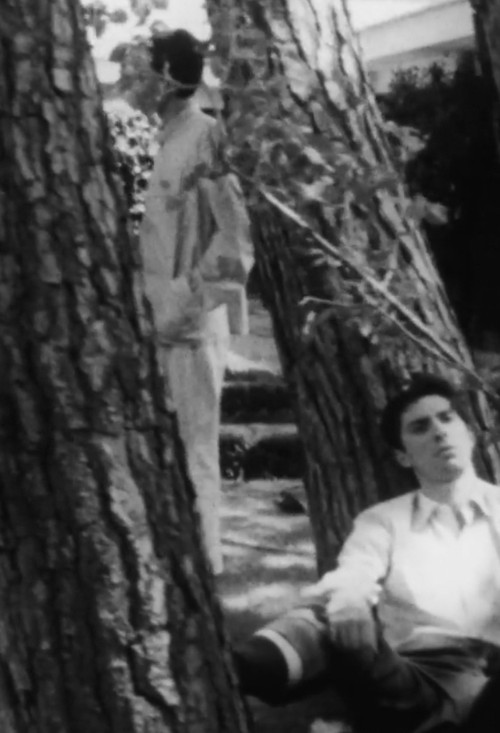
Aleph 1965
Akiva Barkin's *Aleph (1965)* crafts a haunting 11-minute short that explores the fragile boundaries of human connection.
Director: Akiva Barkin
Frequently Asked Questions
What is *Aleph (1965)* about?
*Aleph* follows a man's futile attempts to connect with a woman trapped in a mental institution, where every attempt at communication collapses into silence. The film becomes a stark exploration of isolation and the limits of understanding between two people.
Who directed *Aleph*?
Akiva Barkin directed *Aleph*. Known for his evocative style, Barkin crafts a visually striking short film that lingers in the mind long after the credits roll.
Who stars in *Aleph*?
Cast details for *Aleph (1965)* are not publicly available.
Is *Aleph (1965)* worth watching?
*Aleph* may be a niche pick, but its atmospheric storytelling and emotional depth make it a rewarding watch for fans of experimental cinema. At just 11 minutes, it's a brief yet impactful experience—though its obscurity means it's not for everyone.
How long is *Aleph*?
*Aleph* has a runtime of 11 minutes.
About Aleph (1965) — A Man's Silent Struggle in a Mental Institution
Akiva Barkin's *Aleph (1965)* crafts a haunting 11-minute short that explores the fragile boundaries of human connection. The film follows a man's increasingly desperate efforts to break through to a woman confined in a mental institution, where every gesture—every word—seems to dissolve into silence. Barkin, known for his evocative visual storytelling, transforms this intimate scenario into a meditation on isolation and miscommunication, draped in an atmosphere of quiet tension. The stark black-and-white cinematography amplifies the emotional weight, leaving audiences to ponder what lies beyond the unspoken. A forgotten gem of mid-century cinema, *Aleph* lingers like an unsolved riddle, challenging viewers to decipher its silent language of longing and futility.
While little is known about the cast or genre specifics, *Aleph* stands as a testament to early experimental filmmaking in the 1960s. Its brevity belies its emotional depth, offering a fleeting yet unforgettable glimpse into the human psyche. For fans of cerebral, mood-driven cinema, this compact yet powerful short film remains a curiosity worth seeking out—where every frame feels like a carefully guarded secret.