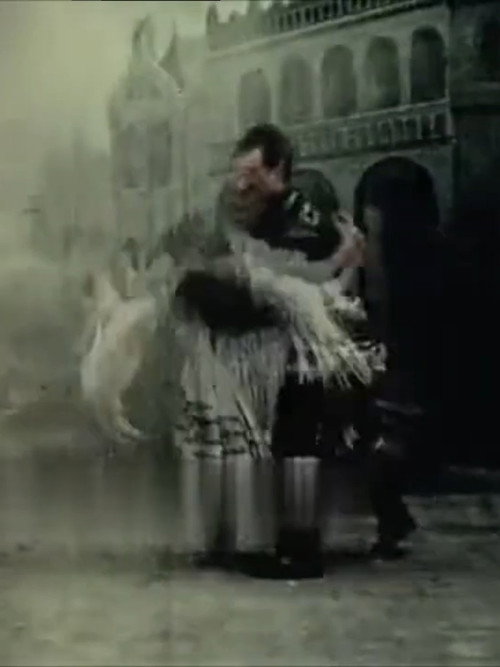
Danse slave 1900
Captured in 1900 by pioneering filmmaker Marguerite Vrignault, *Danse slave* offers a fleeting yet mesmerizing glimpse into the artistic expressions of Jeanne Chasles and Achille Viscusi.
Director: Marguerite Vrignault
Frequently Asked Questions
What is Danse slave (1900) about?
This short film captures a mesmerizing performance by Jeanne Chasles and Achille Viscusi, showcasing their artistic collaboration in a two-minute silent dance sequence. The footage provides a rare glimpse into early 20th-century performance art and cinematic experimentation.
Who directed Danse slave?
The film was directed by Marguerite Vrignault, a pioneering figure in early French cinema whose work contributed to the art form's foundational years.
Who stars in Danse slave?
The film features Jeanne Chasles and Achille Viscusi as the central performers.
Is Danse slave (1900) worth watching?
While extremely short, *Danse slave* is a compelling historical artifact for silent film and dance enthusiasts. Its brevity and artistic focus make it more of a curiosity than a narrative experience, but it's a fascinating slice of early cinema history.
How long is Danse slave?
The film runs for approximately 2 minutes.
🎥 Trailer
About Danse slave (1900) — The Fascinating Dance Short from Early Silent Cinema
Captured in 1900 by pioneering filmmaker Marguerite Vrignault, *Danse slave* offers a fleeting yet mesmerizing glimpse into the artistic expressions of Jeanne Chasles and Achille Viscusi. This two-minute silent film immerses viewers in the elegance of early cinema, where movement and emotion blend seamlessly against the backdrop of a bygone era. The dance itself becomes a window into the cultural and artistic sensibilities of the time, blending rhythm with visual storytelling in a way that feels both timeless and deeply rooted in its historical context.
While details about the film's genre remain elusive, the collaboration between Vrignault and her performers suggests a focus on movement and narrative subtlety. The short runtime makes it a fascinating artifact for silent film enthusiasts and historians alike, offering a rare opportunity to study the evolution of cinematic techniques. Whether viewed as a historical curiosity or a snapshot of early performance art, *Danse slave* (1900) stands as a testament to the enduring power of dance and film to captivate audiences across generations.