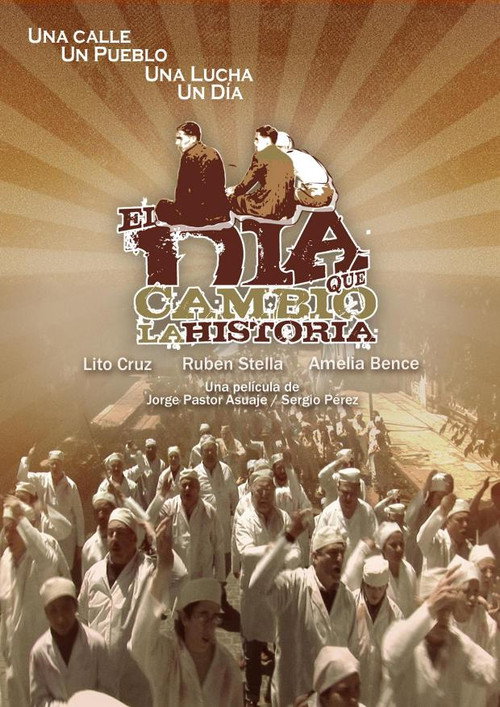
El día que cambió la historia 2012
Directed by Jorge Pastor Asuaje, *El día que cambió la historia* (2012) immerses viewers in Argentina's labor struggles, tracing the evolution of the working class from the early 1900s to a pivotal moment on October 17, 1945.
Director: Jorge Pastor Asuaje
Cast



Frequently Asked Questions
What is *El día que cambió la historia* (2012) about?
This film explores Argentina's labor struggles through the eyes of Berisso's meatpacking workers, chronicling their fight for rights from the early 20th century to the turning point of October 17, 1945—a day that reshaped the country's social and political landscape.
Who directed *El día que cambió la historia*?
Jorge Pastor Asuaje helmed the film, delivering a raw and engaging portrayal of Argentina's working-class history.
Who stars in *El día que cambió la historia*?
The film features standout performances from Lito Cruz, Micaela Cruz, Viviana García, Rubén Stella, and the legendary Amelia Bence, alongside Walter Zuleta.
Is *El día que cambiado la historia* (2012) worth watching?
As a gripping documentary-drama, it's a compelling watch for those interested in labor history and Argentine culture. While IMDb-unrated, its themes of resilience and collective action make it a meaningful experience for fans of socially conscious cinema.
How long is *El día que cambió la historia*?
The film runs for 108 minutes, offering a concise yet immersive dive into its historical narrative.
🎥 Trailer
About El día que cambió la historia (2012) — Argentina's working-class heroes in a pivotal labor movement documentary
Directed by Jorge Pastor Asuaje, *El día que cambió la historia* (2012) immerses viewers in Argentina's labor struggles, tracing the evolution of the working class from the early 1900s to a pivotal moment on October 17, 1945. Through the lens of meatpacking workers in Berisso—key players in this transformative era—the film captures the grit, resilience, and collective spirit that shaped a nation's identity.
Blending documentary precision with dramatic storytelling, the movie highlights the unsung heroes behind historic labor movements, their battles against oppression, and the day their actions echoed through time. With a somber yet inspiring tone, it pays homage to those who risked everything for dignity and change, offering a window into Argentina's social fabric during a defining chapter of its history.