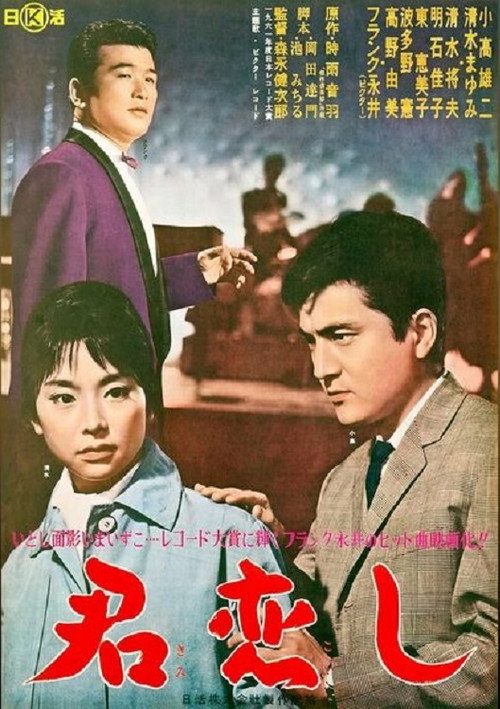
君恋し 1962
Step back into 1962 with 君恋し, a concise yet evocative Japanese film directed by Kenjirō Morinaga that captures the subtle beauty of everyday emotions.
Director: Kenjirō Morinaga
Cast







Frequently Asked Questions
What is 君恋し (1962) about?
This 1962 Japanese film explores the tender yet bittersweet nature of human relationships, where love remains unexpressed and memories linger like shadows. It's a poetic snapshot of lives intertwined by chance and emotion in a rapidly evolving era.
Who directed 君恋し?
Kenjirō Morinaga is the director behind this evocative 1962 film, known for his subtly expressive approach to storytelling.
Who stars in 君恋し?
The cast features Yuji Odaka, Mayumi Shimizu, Masao Shimizu, Frank Nagai, and Emiko Azuma in pivotal roles.
Is 君恋し (1962) worth watching?
While it's a short film, 君恋し offers a reflective and atmospheric experience that fans of classic Japanese cinema will appreciate. Its themes of longing and memory make it a unique watch, though it may not appeal to those seeking fast-paced narratives.
How long is 君恋し?
The film runs for 68 minutes, offering a compact yet impactful cinematic experience.
About 君恋し (1962) — A Quiet Japanese Classic of Longing and Memory
Step back into 1962 with 君恋し, a concise yet evocative Japanese film directed by Kenjirō Morinaga that captures the subtle beauty of everyday emotions.
This 68-minute black-and-white gem unfolds a quietly moving tale centered on themes of longing, memory, and the fleeting nature of human connections. Set against the backdrop of a rapidly changing post-war Japan, the story follows a small circle of characters whose lives intertwine as they grapple with love that remains unspoken and moments that slip away too soon. With a minimalist yet deeply expressive style, Morinaga crafts an atmosphere of quiet introspection, where small gestures carry immense weight and the emotional undercurrents linger long after the credits roll.