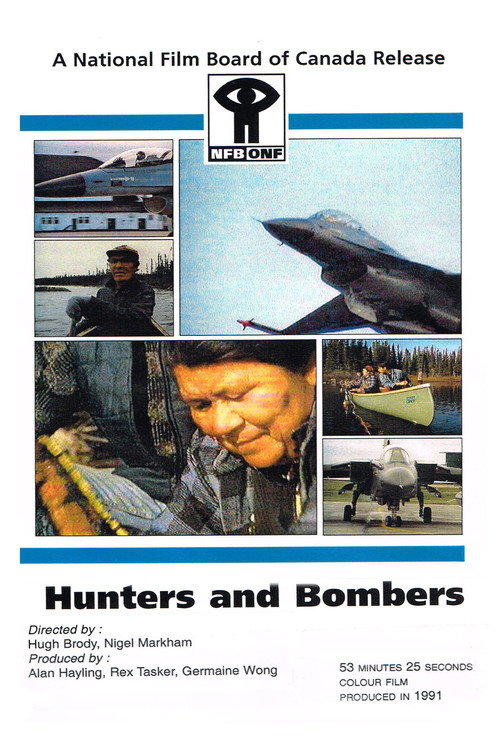
Hunters and Bombers 1991
Hunters and Bombers (1991) is a documentary that delves into the lives of the Innu people and their conflict with NATO air forces. Directed by Nigel Markham, this film captures the complexities of a traditional hunting culture facing social and technological changes.
Director: Nigel Markham
Frequently Asked Questions
What is Hunters and Bombers (1991) about?
This documentary explores the conflict between the Innu people and NATO air forces, delving into the complexities of a traditional hunting culture facing social and technological changes.
Who directed Hunters and Bombers?
Hunters and Bombers was directed by Nigel Markham.
Who stars in Hunters and Bombers?
Unfortunately, the main cast of Hunters and Bombers is not listed.
Is Hunters and Bombers (1991) worth watching?
As an unrated documentary, Hunters and Bombers (1991) may not be for everyone, but its thought-provoking themes and immersive atmosphere make it a worthwhile watch for those interested in environmentalism and Indigenous rights.
How long is Hunters and Bombers?
Hunters and Bombers has a runtime of 53 minutes.
About Hunters and Bombers (1991) — A Glimpse into a World in Conflict
Hunters and Bombers (1991) is a documentary that delves into the lives of the Innu people and their conflict with NATO air forces. Directed by Nigel Markham, this film captures the complexities of a traditional hunting culture facing social and technological changes. As the impact of low-level flights is debated, the documentary sheds light on the often-overlooked changes within Innu society.
From the perspective of those living in the midst of this conflict, Hunters and Bombers (1991) offers a unique glimpse into a world where the lines between tradition and modernity are constantly shifting. With its thought-provoking themes and immersive atmosphere, this documentary is a must-watch for anyone interested in environmentalism, Indigenous rights, and the human experience.
Through its exploration of the Innu people's struggles, Hunters and Bombers (1991) raises important questions about the role of technology in our lives and the importance of preserving traditional ways of life.