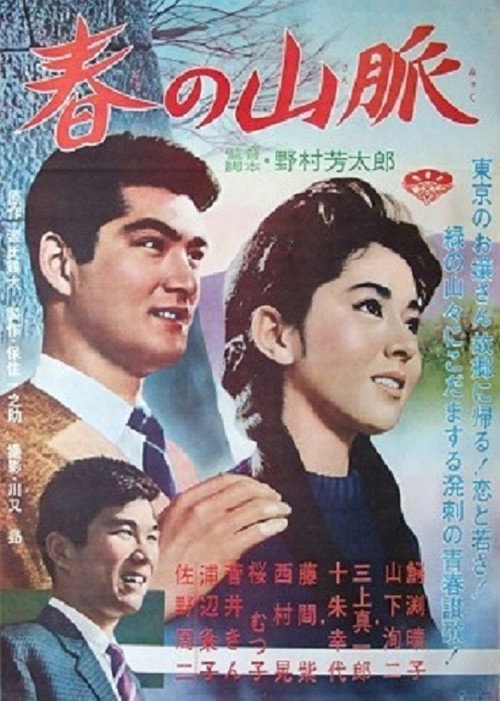
Haru no sanmyaku 1962
Dive into the serene yet deeply emotional world of *Haru no sanmyaku (1962)*, a 1960s Japanese film directed by the masterful Yoshitarō Nomura.
Director: Yoshitarō Nomura
Cast








Frequently Asked Questions
What is Haru no sanmyaku (1962) about?
This Japanese film unfolds during the spring season, weaving together the lives of its characters as they confront personal and societal shifts. The story captures the tension between tradition and modernity, framed by the metaphor of melting mountain snow and renewal.
Who directed Haru no sanmyaku?
The film was directed by Yoshitarō Nomura, a renowned figure in Japanese cinema known for his sensitive and humanistic storytelling.
Who stars in Haru no sanmyaku?
The main cast includes Haruko Wanibuchi, Murasaki Fujima, Junichiro Yamashita, Shinichirō Mikami, and Shūji Sano, with Kumeko Urabe in a supporting role.
Is Haru no sanmyaku (1962) worth watching?
While it may not be widely known, *Haru no sanmyaku* offers a rewarding experience for fans of classic Japanese cinema. Its gentle pace and thematic depth make it a hidden treasure worth discovering, especially for those interested in post-war Japanese culture.
How long is Haru no sanmyaku?
The film has a runtime of 72 minutes.
About Haru no sanmyaku (1962) — A Quiet Japanese Classic of Spring and Memory
Dive into the serene yet deeply emotional world of *Haru no sanmyaku (1962)*, a 1960s Japanese film directed by the masterful Yoshitarō Nomura. Set against the backdrop of post-war Japan, this 72-minute gem explores themes of fleeting seasons, nostalgia, and the quiet resilience of the human spirit. With its delicate storytelling, the film follows a group of characters as they navigate personal and societal changes, their lives intertwined like the mountain streams referenced in the title. Nomura's sensitive direction infuses the narrative with a poetic melancholy, capturing the essence of transition and renewal during springtime. The cast, led by Haruko Wanibuchi and Murasaki Fujima, delivers understated yet powerful performances that linger long after the credits roll.
At its heart, *Haru no sanmyaku* is a reflection on impermanence, where the arrival of spring serves as a metaphor for life's cycles. The film's atmosphere is one of quiet reflection, blending the beauty of nature with the complexities of human relationships. Whether you're drawn to its historical context or its timeless themes, this understated classic offers a poignant viewing experience.