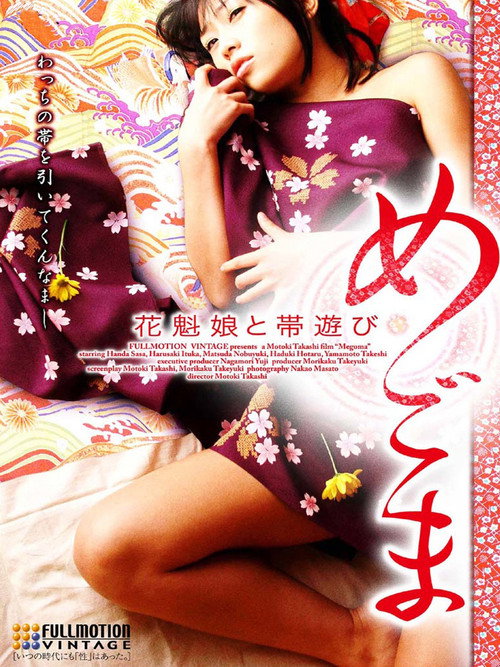
Megoma 2008
In the chilly backdrop of Hana no Edo, a struggling couple, Haru and Moichi, face harsh realities when a desperate act of theft upends their fragile stability.
Director: Takashi Motoki
Cast


Frequently Asked Questions
What is Megoma (2008) about?
Megoma follows Haru and Moichi, a couple forced to flee their home after a theft leaves them desperate and on the run. With nowhere else to turn, they seek refuge at a remote temple, where they confront their past mistakes and grapple with the consequences of survival in a harsh society.
Who directed Megoma?
Megoma was directed by Takashi Motoki, a filmmaker known for crafting emotionally charged narratives set against historical backdrops.
Who stars in Megoma?
The film features Sasa Handa and Itsuka Harusaki as the lead couple, alongside Nobuyuki Matsuda, Takeshi Yamamoto, and Hotaru Hazuki in pivotal roles.
Is Megoma (2008) worth watching?
Though short at 66 minutes, Megoma offers a compelling, atmospheric dive into Edo-era struggles and moral dilemmas. Its tight runtime and strong performances make it a hidden gem worth exploring, especially for fans of historical dramas with emotional depth.
How long is Megoma?
Megoma has a runtime of 66 minutes.
About Megoma (2008) — A Gritty Tale of Survival and Moral Struggle in Edo-Era Japan
In the chilly backdrop of Hana no Edo, a struggling couple, Haru and Moichi, face harsh realities when a desperate act of theft upends their fragile stability. Returning to Haru's village with hope, they find rejection from family and the crushing weight of debt pushing them toward desperation. Their only refuge becomes a remote temple, home to a revered chief priest and a legendary Mawari Kannon, offering solace in their darkest hour. Megoma (2008), directed by Takashi Motoki, weaves a poignant tale of survival, moral ambiguity, and the fragile line between necessity and wrongdoing in a world where poverty dictates choices.
The film thrives on its atmospheric tension, blending the starkness of rural Edo-era life with the emotional turmoil of its characters. Motoki's direction captures the gritty realism of a society where desperation fuels reckless decisions, while the cast, led by Sasa Handa and Itsuka Harusaki, delivers raw performances that ground the story in authenticity. Themes of redemption, community disillusionment, and the search for sanctuary linger long after the credits roll.