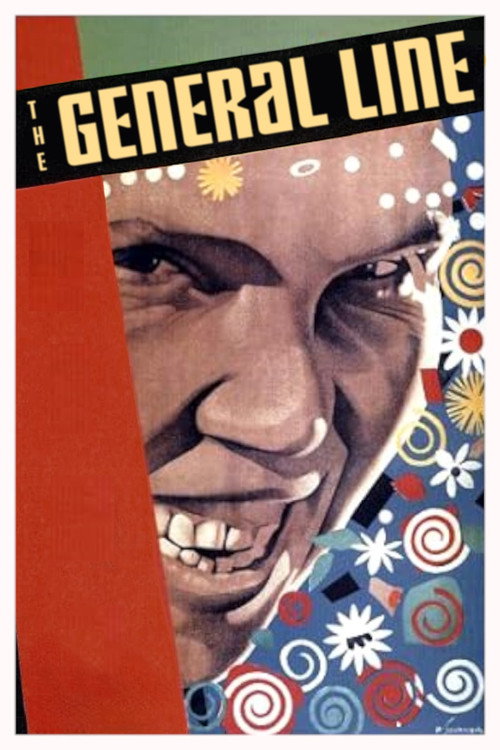
The General Line 1929
Sergei Eisenstein's monumental silent-era drama, *The General Line* (1929), also known as *The Old and the New*, charts a sweeping transformation of rural Russia as collectivization sweeps through the countryside.
Director: Sergei Eisenstein
Cast
Frequently Asked Questions
What is The General Line (1929) about?
*The General Line* follows a peasant woman's journey as she embraces the Soviet Union's push for farm collectivization in the late 1920s. The film dramatizes the clash between old agrarian ways and modern industrial farming, using Eisenstein's groundbreaking visual storytelling to turn policy into powerful cinema.
Who directed The General Line?
The film was directed by Sergei Eisenstein, the legendary Soviet filmmaker celebrated for his revolutionary use of montage and epic historical dramas.
Who stars in The General Line?
The cast features Marfa Lapkina in the lead role, alongside M. Ivanin, Konstantin Vasilyev, Vasili Buzenkov, and Nezhnikov, with Chukamaryev in a supporting part.
Is The General Line (1929) worth watching?
While not as widely known today, *The General Line* offers a fascinating glimpse into Eisenstein's craft and Soviet cinema of the era. Its stark visuals and historical significance make it compelling for silent-film enthusiasts and students of early 20th-century political cinema, though casual viewers may prefer more accessible classics.
How long is The General Line?
The runtime for *The General Line* is 125 minutes, or just over two hours of immersive silent-era storytelling.
About The General Line (1929) — A Silent-Era Epic of Soviet Collectivization and Change
Sergei Eisenstein's monumental silent-era drama, *The General Line* (1929), also known as *The Old and the New*, charts a sweeping transformation of rural Russia as collectivization sweeps through the countryside. At its heart is Marfa Lapkina's unforgettable portrayal of a determined peasant woman navigating the turbulent shift from traditional farming to modern agricultural collectives. With Eisenstein's signature montage style, the film transforms economic policy into cinematic poetry, blending raw realism with revolutionary optimism. The black-and-white frames pulse with the energy of progress, capturing both the struggle and the triumph of a nation reshaping itself from the soil up.
Set against a backdrop of dusty fields and bustling collective farms, *The General Line* (1929) is less a dry historical document than a rousing ode to collective ambition. Eisenstein contrasts the hardship of individual labor with the promise of shared effort, where machinery hums like a new anthem and community bonds replace isolation. The film's themes of change, solidarity, and the price of progress resonate beyond its era, making it a timeless study of social evolution through the lens of personal struggle.