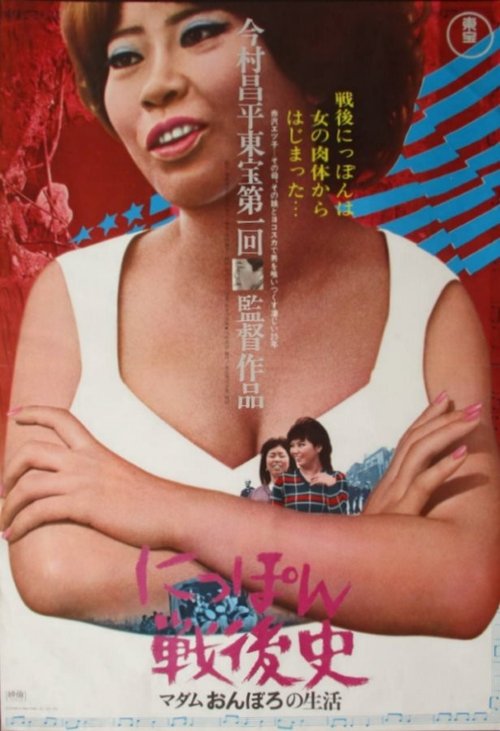
History of Postwar Japan as Told by a Bar Hostess 1970
Immerse yourself in Shōhei Imamura's distinctive documentary *History of Postwar Japan as Told by a Bar Hostess* (1970), a raw and immersive exploration of Japan's transformative years from 1945 to 1970.
Director: Shōhei Imamura
Cast
Frequently Asked Questions
What is *History of Postwar Japan as Told by a Bar Hostess* (1970) about?
The film follows Etsuko, a resilient bar hostess in Yokosuka, as she navigates Japan's turbulent postwar landscape from the atomic bombings to the Korean War. Through her personal story, Shōhei Imamura captures the social and economic upheavals that reshaped a nation over 25 years.
Who directed *History of Postwar Japan as Told by a Bar Hostess*?
The film was directed by Shōhei Imamura, one of Japan's most celebrated auteurs, known for his bold, socially conscious films like *The Ballad of Narayama* and *Pigs and Battleships*.
Who stars in *History of Postwar Japan as Told by a Bar Hostess*?
The central figure is Emiko Akaza, who portrays Etsuko, the bar hostess whose life becomes the lens for this historical narrative.
Is *History of Postwar Japan as Told by a Bar Hostess* (1970) worth watching?
While not rated on IMDb, this documentary offers a compelling, unfiltered look at Japan's postwar era through a uniquely personal perspective. Fans of Imamura's work or historical documentaries will appreciate its raw authenticity and thematic depth.
How long is *History of Postwar Japan as Told by a Bar Hostess*?
The film runs for 105 minutes.
About History of Postwar Japan as Told by a Bar Hostess (1970) — A raw, human portrait of Japan's postwar era
Immerse yourself in Shōhei Imamura's distinctive documentary *History of Postwar Japan as Told by a Bar Hostess* (1970), a raw and immersive exploration of Japan's transformative years from 1945 to 1970. Through the eyes of Etsuko, a spirited bar manager in Yokosuka who navigates survival amid the chaos of atomic destruction, black markets, and post-war hardship, the film weaves archival footage with intimate storytelling to chronicle a nation's rebirth. Etsuko's resilience—shaped by war, American occupation, and the Korean Conflict—becomes the lens through which Imamura examines the intersection of personal endurance and historical upheaval. This isn't just history; it's a visceral, human account of how ordinary lives grappled with extraordinary change.
Blending documentary authenticity with Imamura's signature social realism, the film strips away political abstractions to reveal the gritty texture of daily existence in a rapidly shifting Japan. Etsuko's journey, fueled by wit and survival instinct, embodies the indomitable spirit of a generation defined by loss and reinvention. With its unflinching gaze and dynamic montage, *History of Postwar Japan as Told by a Bar Hostess* offers more than a historical record—it's a testament to the power of storytelling as a tool for reclaiming agency in the face of adversity.