Feed/Kill 2010
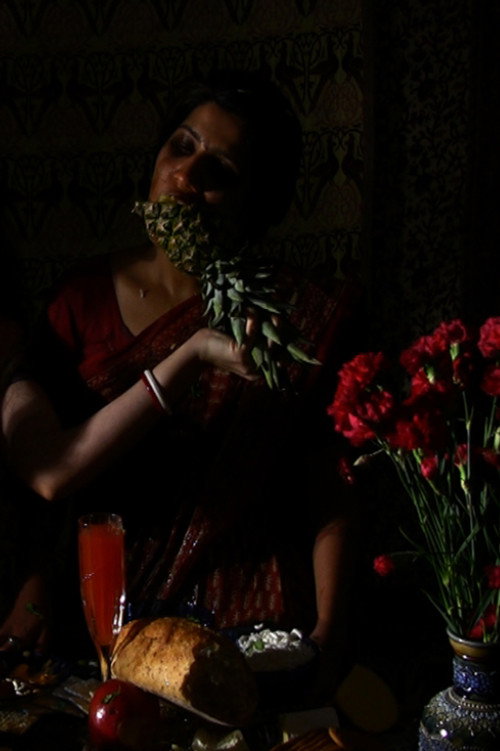
Directed by artist-filmmaker Tejal Shah, *Feed/Kill (2010)* is an 8-minute experimental short that dissolves the boundaries between intimacy and violence, desire and revulsion.
Director: Tejal Shah
Cast
Frequently Asked Questions
What is Feed/Kill (2010) about?
*Feed/Kill* presents a surreal, tension-filled interaction between two women in traditional Indian clothing, where the act of feeding transforms into a charged ritual crossing the line between care and control. The film uses opulent sensory details—flowers, fruits, and juices—to heighten its erotic and grotesque undertones, leaving viewers to ponder the blurred boundaries of human connection and desire.
Who directed Feed/Kill?
The short film was directed by Tejal Shah, an interdisciplinary artist known for her bold, politically charged explorations of gender, power, and identity in visual media.
Who stars in Feed/Kill?
The film stars Tejal Shah herself alongside Marylea Madiman, whose intense, transformative performance anchors its unsettling narrative.
Is Feed/Kill (2010) worth watching?
As an avant-garde short, *Feed/Kill* may not appeal to mainstream audiences, but its provocative themes and striking visuals make it a compelling watch for those interested in experimental cinema. Given its concise 8-minute runtime, it's an accessible yet thought-provoking dive into the complexities of human emotion and power dynamics.
How long is Feed/Kill?
The film runs for 8 minutes.
About Feed/Kill (2010) — A Provocative 8-Minute Exploration of Power and Intimacy
Directed by artist-filmmaker Tejal Shah, *Feed/Kill (2010)* is an 8-minute experimental short that dissolves the boundaries between intimacy and violence, desire and revulsion. Set against a tableau of vibrant flowers and lush fruits, Shah and collaborator Marylea Madiman, clad in traditional Indian attire, engage in a charged exchange where nourishment becomes both sensual and unsettling. As excessive feeding unfolds, the scene oscillates between tenderness and aggression, inviting viewers to question the raw, often blurred lines of human connection.
Shah's visually arresting work challenges conventional narratives of power and vulnerability, blending aesthetic beauty with provocative grotesquery. The film's tension arises from its refusal to resolve contradictions, leaving audiences to confront their own discomfort while marveling at its bold, unflinching execution. A mesmerizing exploration of eros and power, *Feed/Kill* lingers long after its brief runtime, cementing its place as a provocative piece in contemporary avant-garde cinema.