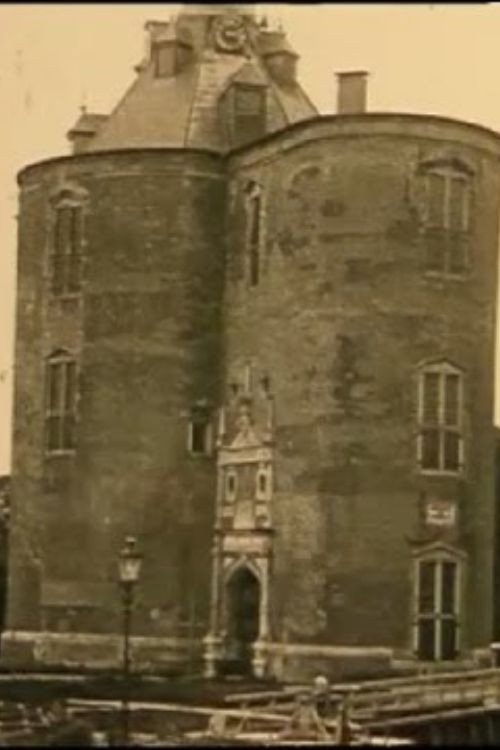
Enkhuizen 1919
Willy Mullens' *Enkhuizen (1919)* transports viewers to the Netherlands' storied past with a breathtaking silent-film snapshot of the town from above.
Director: Willy Mullens
Frequently Asked Questions
What is Enkhuizen (1919) about?
*Enkhuizen (1919)* is a silent documentary that offers a bird's-eye view of the Dutch town from a church tower. The film showcases the harbor, the 'Dromedaris' fortress, and the former Zuiderzee, preserving a moment of early 20th-century life through striking visuals.
Who directed Enkhuizen?
The film was directed by Willy Mullens, a notable figure in early Dutch cinema.
Who stars in Enkhuizen?
Cast details for *Enkhuizen* are not available.
Is Enkhuizen (1919) worth watching?
As a silent documentary short, *Enkhuizen* is best appreciated for its historical and aesthetic value. Its brief runtime and artistic composition make it a charming curiosity for fans of early film or Dutch heritage, though it may not appeal to modern audiences seeking narrative depth.
How long is Enkhuizen?
The runtime of *Enkhuizen* is 8 minutes.
🎥 Trailer
About Enkhuizen (1919) — A Dutch Silentscape from a Church Tower
Willy Mullens' *Enkhuizen (1919)* transports viewers to the Netherlands' storied past with a breathtaking silent-film snapshot of the town from above. Shot from the vantage point of an old church tower, this 8-minute documentary captures the timeless beauty of Enkhuizen's harbor and the iconic 'Dromedaris' fortress tower, its silhouette standing sentinel over the former Zuiderzee. The film is a quiet homage to a bygone era, where the silence of the lens amplifies the weight of history, revealing the intricate details of a coastal town frozen in time. For historians and film buffs alike, it's a rare glimpse into early 20th-century Dutch life, where architecture and waterways tell stories older than the century itself.
Directed by the prolific Willy Mullens, *Enkhuizen* blends documentary precision with artistic vision, transforming a simple panoramic shot into a cinematic postcard. The absence of dialogue invites viewers to immerse themselves in the textures of the town—weathered bricks, glistening water, and the distant murmur of a community shaped by trade and tides. Though minimal in scope, the film's serene atmosphere lingers, offering a meditative pause in an era of rapid change.