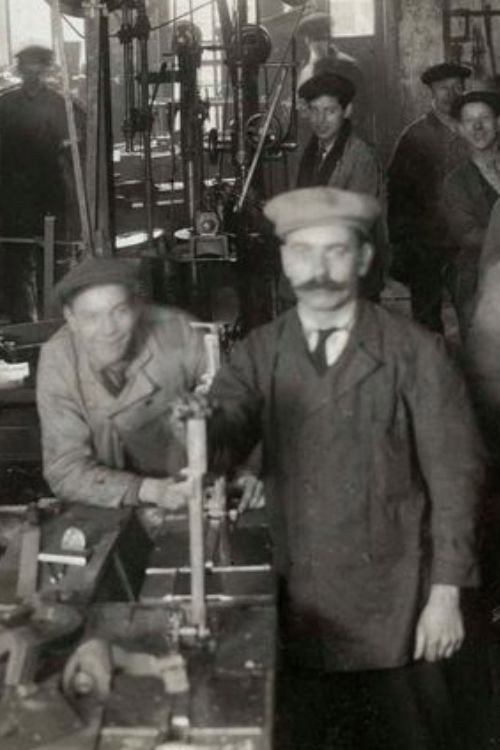
Tijd Voor Ontspanning Dankzij de Acht-urendag 1930
Tijd Voor Ontspanning Dankzij de Acht-urendag (1930) offers a fascinating glimpse into early documentary filmmaking, exploring themes of work, rest, and daily life rhythms. Directed by J.Th.A.
Director: J.Th.A. van der Wal
Frequently Asked Questions
What is Tijd Voor Ontspanning Dankzij de Acht-urendag (1930) about?
This 1930 documentary examines the relationship between work and relaxation, focusing on the eight-hour work cycle and how people find time for repose in their daily lives. The film provides social commentary through its observational approach to labor and leisure.
Who directed Tijd Voor Ontspanning Dankzij de Acht-urendag?
The film was directed by J.Th.A. van der Wal, though detailed information about his filmmaking career is not widely documented in available records.
Who stars in Tijd Voor Ontspanning Dankzij de Acht-urendag?
Cast information for this documentary is currently unknown, as the film appears to focus on observational content rather than traditional acting roles.
Is Tijd Voor Ontspanning Dankzij de Acht-urendag (1930) worth watching?
For documentary enthusiasts and those interested in early cinema history, this film offers valuable cultural insight. While it lacks an IMDb rating due to its age and obscurity, its historical significance makes it worthwhile for viewers exploring 1930s European filmmaking.
How long is Tijd Voor Ontspanning Dankzij de Acht-urendag?
Runtime details are not listed in available film databases, which is common for documentaries from this era.
Tijd Voor Ontspanning Dankzij de Acht-urendag (1930): Early Documentary on Work and Rest
Tijd Voor Ontspanning Dankzij de Acht-urendag (1930) offers a fascinating glimpse into early documentary filmmaking, exploring themes of work, rest, and daily life rhythms. Directed by J.Th.A. van der Wal, this Dutch production presents a contemplative examination of how people balance their demanding schedules with moments of relaxation. The film's focus on the eight-hour work cycle suggests a thoughtful commentary on labor conditions and human well-being during an era of industrial change.
As a documentary from 1930, the film carries the distinctive aesthetic and storytelling approach of early cinema, providing historical context for viewers interested in both filmmaking evolution and social documentation. The absence of known cast details doesn't diminish its value as an authentic period piece that captures the zeitgeist of its time. Audiences seeking stream or download options will find this rare documentary available across multiple devices for those curious about early 20th-century European cinema.