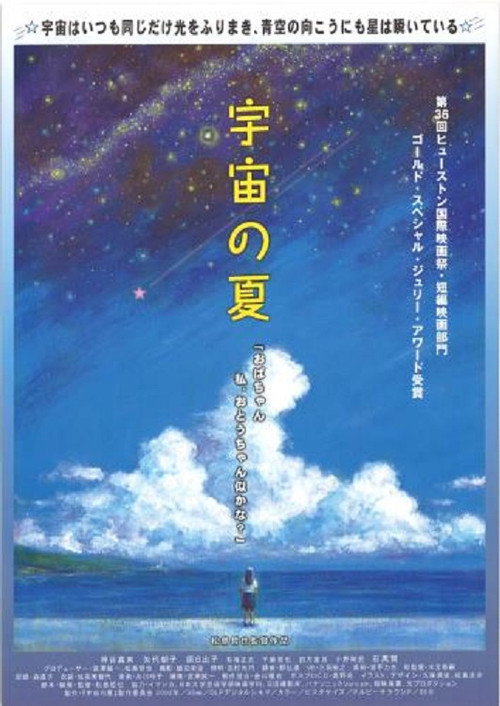
Uchū no natsu 2003
In *Uchū no natsu (2003)*, Tetsuya Matsushima crafts a delicate drama that weaves together grief and quiet resilience.
Director: Tetsuya Matsushima
Cast




Frequently Asked Questions
What is Uchū no natsu (2003) about?
The film explores Kanako's emotional journey after losing her parents, as she seeks refuge with her grandmother in a seaside town. Through gentle interactions and quiet introspection, it portrays her struggle to find peace amid grief and the slow process of rediscovering purpose.
Who directed Uchū no natsu?
Uchū no natsu was directed by Tetsuya Matsushima, who guides the story with a focus on understated drama and emotional subtlety.
Who stars in Uchū no natsu?
The film stars Mami Kamiya in the lead role, with Asako Yashiro, Ken Ishiguro, Hideko Hara, and Masashi Arifuku in key supporting parts.
Is Uchū no natsu (2003) worth watching?
As a 30-minute drama, *Uchū no natsu* offers a meditative experience for fans of quiet, character-driven narratives. While not widely rated, its themes of loss and renewal make it a compelling short film for those who appreciate atmospheric storytelling.
How long is Uchū no natsu?
The runtime of *Uchū no natsu* is approximately 30 minutes.
Uchū no natsu (2003): A Coastal Drama of Loss and Renewal
In *Uchū no natsu (2003)*, Tetsuya Matsushima crafts a delicate drama that weaves together grief and quiet resilience. The film follows Kanako, a young woman reeling from the sudden loss of her parents, as she finds solace in the slow rhythms of a coastal town under her grandmother's care. Shot against the backdrop of shimmering seas and endless skies, the story unfolds with an understated emotional depth, capturing the bittersweet passage of time as Kanako grapples with her past and tentatively embraces her future. Matsushima's direction balances tender moments with unspoken tensions, portraying healing not as a linear journey but as an ongoing exploration of memory and connection.
With its minimalist storytelling, *Uchū no natsu* delivers a poignant reflection on family, loss, and the subtle ways life rebuilds itself after heartbreak. The film's atmosphere is one of muted warmth, where every glance and whispered conversation carries weight, and the sea becomes both a witness and a mirror to Kanako's inner world.