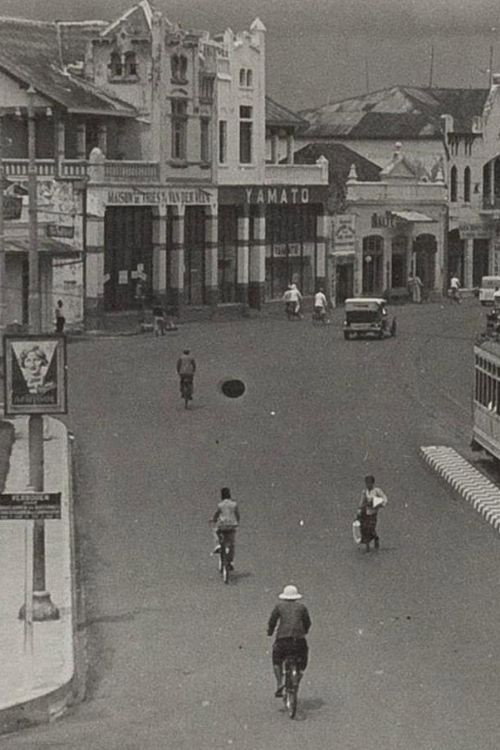
Straten van Surabaja 1936
Step back to 1936 and explore the bustling streets of Surabaya through this fascinating Dutch-Indies documentary, Straten van Surabaja (1936).
Frequently Asked Questions
What is Straten van Surabaja (1936) about?
Straten van Surabaja (1936) is a documentary that captures the everyday life and urban landscape of Surabaya during the Dutch colonial period. The film documents the city's streets, markets, and public spaces, offering a rare visual record of life in early 20th-century Indonesia.
Who directed Straten van Surabaja?
Director information is not available.
Who stars in Straten van Surabaja?
As a documentary, Straten van Surabaja (1936) features no traditional cast, but it showcases real-life residents, vendors, and scenes of colonial-era Surabaya.
Is Straten van Surabaja (1936) worth watching?
For history and documentary enthusiasts, Straten van Surabaja (1936) is a fascinating time capsule. While not a narrative film, its cultural and historical value makes it a compelling watch for those interested in early cinema or the Dutch East Indies. Its rarity and authenticity outweigh its modest production scale.
How long is Straten van Surabaja?
Runtime details are not listed.
About Straten van Surabaja (1936) — A Glimpse into Colonial-Era Surabaya on Film
Step back to 1936 and explore the bustling streets of Surabaya through this fascinating Dutch-Indies documentary, Straten van Surabaja (1936). Directed by an anonymous filmmaker, this rare glimpse into a bygone era captures the vibrant daily life of one of Indonesia's most dynamic cities during its colonial heyday. The film paints a vivid portrait of Surabaya's labyrinthine markets, colonial architecture, and the energetic pulse of its multicultural community, from street vendors to tram lines. With its documentary lens, Straten van Surabaja (1936) offers more than just nostalgia—it's a time capsule of early 20th-century urban culture in the Dutch East Indies, revealing the contrasts and connections between tradition and modernity.
Though modest in scope and production, the film stands as a historical artifact, showcasing the rhythm of life in a city that was once a crossroads of trade and culture. Its black-and-white visuals carry an unmistakable authenticity, transporting viewers to a place where rickshaws mingled with horse-drawn carriages and steamships docked along the Kalimas River. Straten van Surabaja (1936) isn't just a film; it's a window into a world that has long since evolved, preserved through the lens of early cinema.