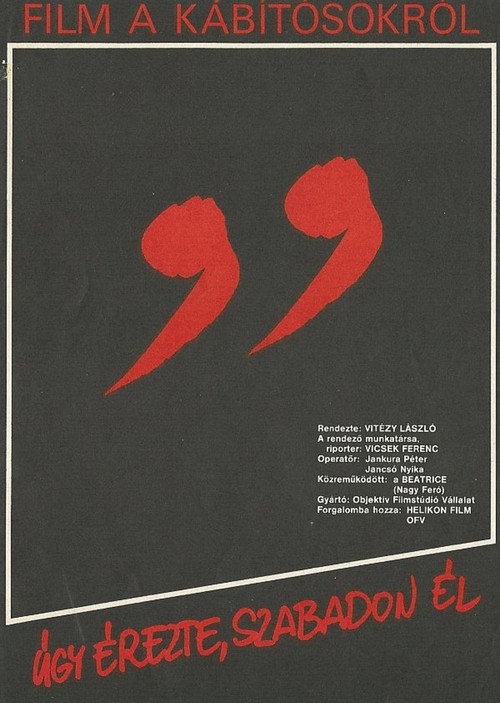
Floating Free 1988
László Vitézy's groundbreaking 1988 documentary *Floating Free* shatters the silence surrounding Hungary's drug crisis during the late Kádár era.
Director: László Vitézy
Cast

Frequently Asked Questions
What is Floating Free (1988) about?
*Floating Free* dives deep into Hungary's drug epidemic during the late 1980s, giving a voice to those society had pushed to the fringes. It documents the personal struggles of addicts while scrutinizing the official responses—or lack thereof—that fueled the crisis. The film balances heart-wrenching individual stories with a critical look at institutional failures.
Who directed Floating Free?
Floating Free was directed by László Vitézy, a filmmaker known for tackling socially relevant themes with unflinching honesty.
Who stars in Floating Free?
The documentary features Feró Nagy, Cseke Attila, Solt Otília, and notable interviews with Dr. Kacziba Antal and Dr. Kisszékelyi Ödön.
Is Floating Free (1988) worth watching?
As an unrated but historically significant documentary, *Floating Free* offers a rare, unfiltered look at a dark chapter in Hungarian history. Its raw storytelling and social impact make it compelling for viewers interested in documentary films and 1980s Eastern European society. While not a mainstream pick, its cultural importance is undeniable.
How long is Floating Free?
Floating Free has a runtime of 118 minutes, or just under two hours.
About Floating Free (1988) — The documentary that gave voice to Hungary's drug crisis
László Vitézy's groundbreaking 1988 documentary *Floating Free* shatters the silence surrounding Hungary's drug crisis during the late Kádár era. As the country's first film to amplify the voices of marginalized individuals trapped in the shadows of addiction, it exposes raw, unfiltered stories of survival while probing the systemic failures that allowed the epidemic to fester. Blending intimate portraits of those on society's fringes with sobering insights from officials, the documentary paints a stark, unflinching picture of a society grappling with its own complicity. The film's black-and-white visuals and stark honesty evoke a haunting atmosphere, one that lingers long after the credits roll, forcing viewers to confront uncomfortable truths about addiction, neglect, and human resilience.
Through Vitézy's lens, *Floating Free* becomes more than a warning—it's a plea for empathy and action. The documentary's unflinching gaze into the lives of Hungary's forgotten offers a rare glimpse into a hidden world, where stigma and silence collide with the harsh realities of life on the margins. Its legacy lies not just in its historical significance but in its ability to challenge viewers to look beyond the headlines and see the human faces behind the headlines of addiction.
*Floating Free (1988)* remains a vital piece of both Hungarian cinema and social history.