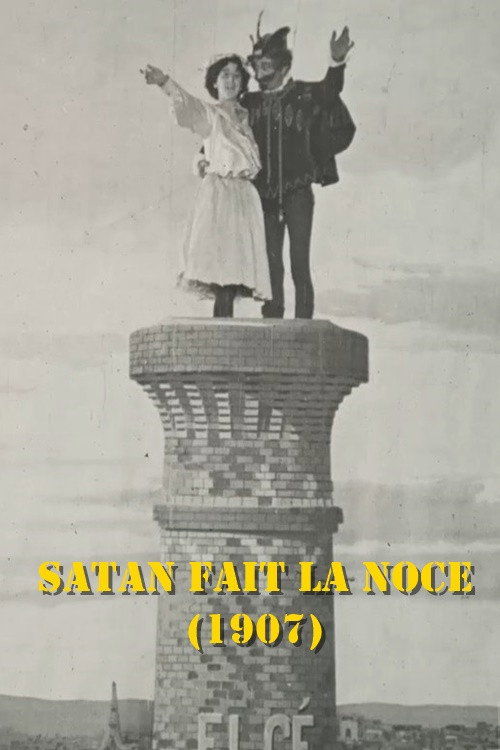
Satan fait la noce 1907
Satan fait la noce (1907) represents a fascinating glimpse into the earliest days of French cinema, offering viewers a brief but intriguing journey into the fantasy genre during the silent film era.
Director: Louis Feuillade
Frequently Asked Questions
What is Satan fait la noce (1907) about?
While specific plot details are not available, the title suggests a supernatural fantasy narrative involving demonic or satanic themes, characteristic of early experimental cinema. The film likely employed visual storytelling techniques typical of silent films from this era.
Who directed Satan fait la noce?
The film was directed by Louis Feuillade, a pioneering French filmmaker known for his influential serial films and contributions to early cinema.
Who stars in Satan fait la noce?
Cast information for Satan fait la noce (1907) is currently unknown and not documented in available records.
Is Satan fait la noce (1907) worth watching?
For film historians and enthusiasts of early cinema, Satan fait la noce offers historical value as a surviving example of 1907 French fantasy filmmaking, though its brief runtime and lack of surviving critical reception make it primarily of academic interest.
How long is Satan fait la noce?
Satan fait la noce runs for 8 minutes, reflecting the typical length of early silent film productions.
🎥 Trailer
Satan fait la noce (1907): Early Fantasy Short — Full Movie Info
Satan fait la noce (1907) represents a fascinating glimpse into the earliest days of French cinema, offering viewers a brief but intriguing journey into the fantasy genre during the silent film era. Directed by the renowned pioneer Louis Feuillade, this 8-minute short film showcases the experimental storytelling techniques that defined early 20th-century filmmaking. While specific plot details remain lost to time, the film's title suggests a darkly imaginative narrative involving supernatural themes typical of Feuillade's work during this period.
This early fantasy piece exemplifies the creative spirit of 1907 cinema, when filmmakers were just beginning to explore the medium's potential for visual storytelling. Louis Feuillade, known for his innovative serial films and contributions to French cinema, brings his distinctive touch to this brief but memorable work. The film's brevity reflects the technical and economic constraints of early filmmaking, yet it remains a valuable artifact for cinephiles interested in the evolution of fantasy cinema and the transition from stage to screen storytelling.