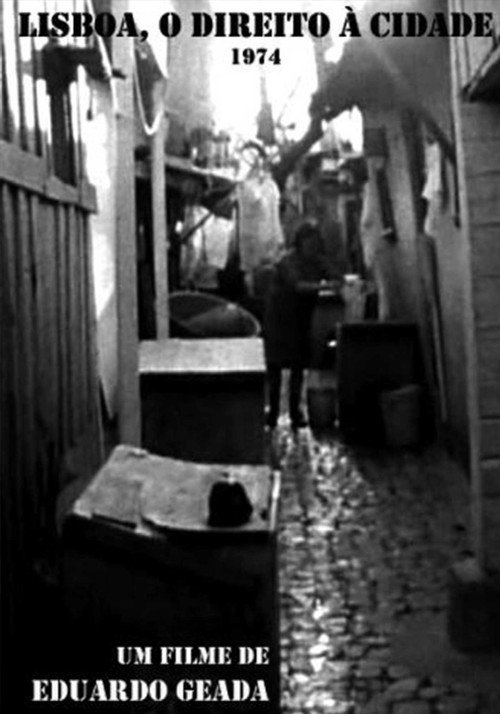
Lisboa, o Direito à Cidade 1975
Eduardo Geada's *Lisboa, o Direito à Cidade* (1975) dives deep into the urban landscape of Lisbon, exposing how capitalist city planning mirrors class struggle and economic disparity.
Director: Eduardo Geada
Frequently Asked Questions
What is Lisboa, o Direito à Cidade (1975) about?
This 1975 documentary dissects Lisbon's urban fabric through a Marxist critique, revealing how capitalist planning perpetuates class divides. It examines unequal access to resources and space, framing the city as a battleground for economic and social power.
Who directed Lisboa, o Direito à Cidade?
Eduardo Geada directed this politically charged documentary, offering a radical perspective on urban reality.
Who stars in Lisboa, o Direito à Cidade?
Director information is not available.
Is Lisboa, o Direito à Cidade (1975) worth watching?
While not widely rated, the film's political depth and historical context make it a compelling watch for fans of Marxist cinema or urban studies. Its impact lies in its ideas rather than entertainment value.
How long is Lisboa, o Direito à Cidade?
Runtime details are not listed.
About Lisboa, o Direito à Cidade (1975) — A Marxist Lens on Lisbon's Urban Divide
Eduardo Geada's *Lisboa, o Direito à Cidade* (1975) dives deep into the urban landscape of Lisbon, exposing how capitalist city planning mirrors class struggle and economic disparity. Through sharp critiques delivered off-screen, the film dissects the unequal distribution of space, resources, and opportunities across neighborhoods, revealing a city divided by invisible boundaries. Its Marxist lens frames urban decay and gentrification as tools of systemic control, challenging viewers to question who truly benefits from modern development. Set against the backdrop of post-revolution Portugal, the documentary captures a moment of raw socio-political tension.
Blending documentary realism with ideological urgency, Geada's work transforms Lisbon's streets into a battleground for social justice. The film's unflinching portrayal of spatial inequality resonates with audiences drawn to political cinema that demands reflection. Whether you're a student of urban studies or a fan of bold, thought-provoking filmmaking, *Lisboa, o Direito à Cidade* (1975) offers a compelling exploration of power, place, and protest.