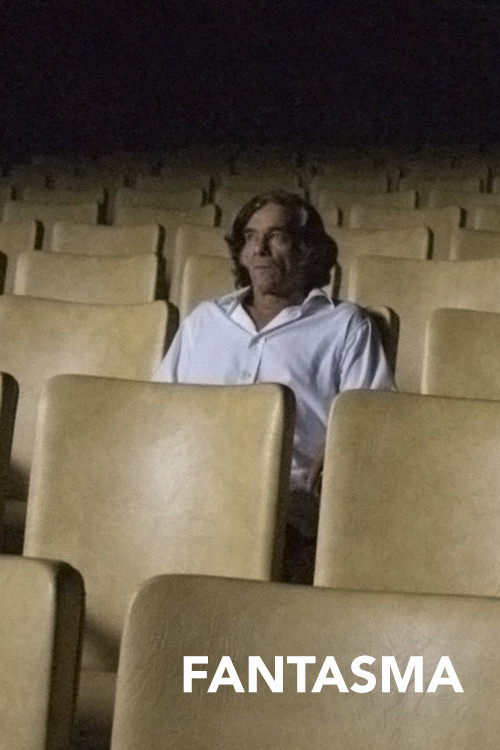
Fantasma 2007
Lisandro Alonso's meditative drama *Fantasma (2007)* follows a lone man whose quiet routine revolves around slipping into the historic Teatro San Martín on Buenos Aires' vibrant Corrientes Avenue.
Director: Lisandro Alonso
Cast
Frequently Asked Questions
What is Fantasma (2007) about?
*Fantasma (2007)* centers on a quiet, introspective man who finds refuge in Buenos Aires' Teatro San Martín. His visits to the cinema become a ritual of introspection, where he grapples with personal demons and the weight of isolation. The film unfolds with deliberate stillness, inviting viewers to share in his unspoken journey.
Who directed Fantasma?
Lisandro Alonso directed *Fantasma (2007)*. Known for his contemplative style, Alonso crafts films that explore existential themes with quiet intensity.
Who stars in Fantasma?
Argentino Vargas stars as the film's solitary protagonist, with Misael Saavedra joining him in this stark character study.
Is Fantasma (2007) worth watching?
If you appreciate slow-burn, atmospheric films that prioritize mood and character over plot, *Fantasma (2007)* is well worth your time. Its 63-minute runtime belies a rich, meditative experience that lingers in the mind. Fans of poetic cinema or Lisandro Alonso's other works will find much to admire here.
How long is Fantasma?
The runtime for *Fantasma (2007)* is 63 minutes.
About Fantasma (2007) — A Solitary Man's Cinema in Buenos Aires
Lisandro Alonso's meditative drama *Fantasma (2007)* follows a lone man whose quiet routine revolves around slipping into the historic Teatro San Martín on Buenos Aires' vibrant Corrientes Avenue. There, amid the flickering glow of the cinema, he confronts his personal shadows, finding solace in the ephemeral escape of film. Shot in stark black-and-white, the 63-minute feature strips storytelling to its essence, immersing viewers in a contemplative atmosphere where time seems to slow and the boundaries between reality and memory blur.
At its core, *Fantasma (2007)* isn't just about a man lost in movies—it's a reflection on solitude, the weight of the past, and the fleeting nature of human connection. Argentino Vargas delivers a quietly powerful performance, embodying a character whose silent journey resonates long after the credits roll. Alonso's minimalist approach, paired with Misael Saavedra's understated presence, crafts a hauntingly poetic experience that lingers like the afterimage of a film projector's beam.