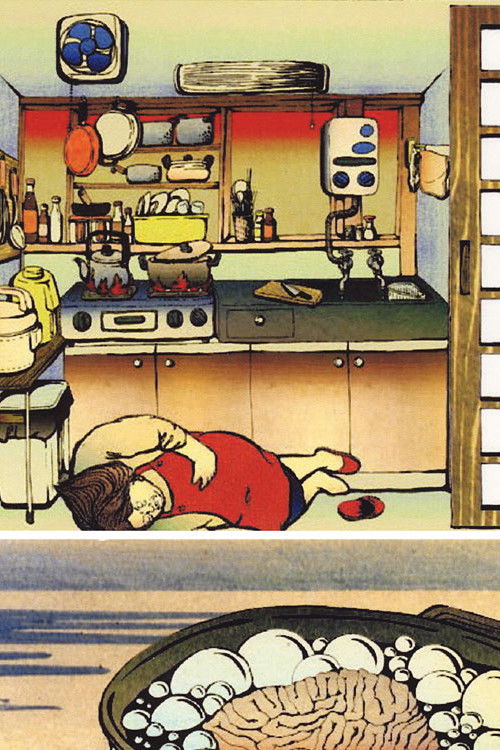
Japanese Kitchen 1999
Japanese Kitchen (1999) is a striking five-minute animated short film that launched Japanese artist Tabaimo's international career after winning the Kirin Contemporary Award.
Director: Tabaimo
Cast
Frequently Asked Questions
What is Japanese Kitchen (1999) about?
Japanese Kitchen (1999) is a surreal animated short that transforms a familiar kitchen into a nightmarish culinary space. The film plays with cultural tropes and bodily imagery, creating a disorienting yet mesmerizing experience that challenges viewers' perceptions of home and tradition.
Who directed Japanese Kitchen?
Japanese Kitchen (1999) was directed by Tabaimo, a visionary Japanese artist whose work often blends animation with social commentary.
Who stars in Japanese Kitchen?
The film features Kana Nakauchi as the primary performer, though the animation's impact relies more on visual storytelling than traditional acting.
Is Japanese Kitchen (1999) worth watching?
As a five-minute experimental piece, Japanese Kitchen (1999) is worth watching for fans of avant-garde animation and Tabaimo's unique artistic voice. Its brevity and bold visuals make it a standout in short film history, though it may not appeal to those seeking conventional narratives.
How long is Japanese Kitchen?
Japanese Kitchen (1999) runs for 5 minutes.
About Japanese Kitchen (1999) — A surreal 5-minute animated journey by Tabaimo
Japanese Kitchen (1999) is a striking five-minute animated short film that launched Japanese artist Tabaimo's international career after winning the Kirin Contemporary Award. This experimental piece blends surreal visuals with a dreamlike narrative, immersing viewers in a bizarre culinary world where tradition meets the absurd. The film's eerie atmosphere and symbolic storytelling reflect Tabaimo's signature style, blending cultural motifs with unsettling humor. Originally created as Tabaimo's undergraduate thesis, Japanese Kitchen (1999) stands as a bold introduction to her later acclaimed works, showcasing her ability to distill complex themes into minimalist, unforgettable imagery.
With only Kana Nakauchi credited as the key performer, the film relies heavily on its visual language rather than dialogue. The animation's stark simplicity contrasts with its rich thematic layers, exploring identity, consumption, and the tension between familiarity and strangeness. For fans of avant-garde animation, Japanese Kitchen (1999) offers a tantalizing glimpse into Tabaimo's early genius—a work that's as thought-provoking as it is visually arresting.