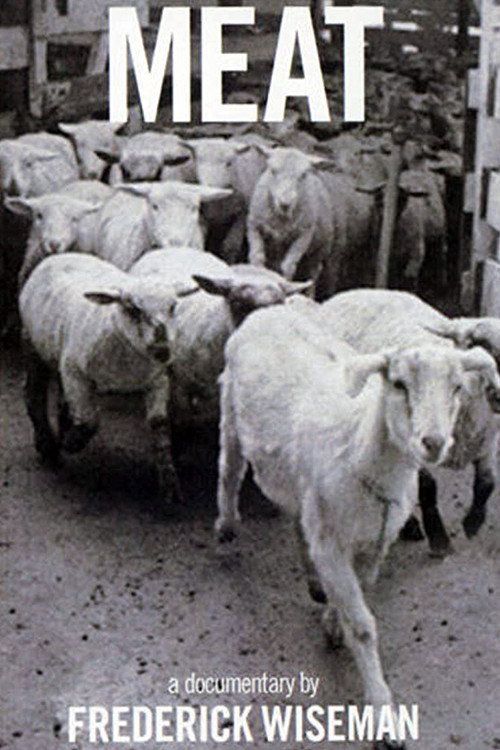
Meat 1976
Frederick Wiseman's *Meat (1976)* pulls back the curtain on an industrial meatpacking plant, exposing the relentless machinery behind beef and lamb production.
Director: Frederick Wiseman
Frequently Asked Questions
What is Meat (1976) about?
*Meat (1976)* follows the journey of cattle and sheep through an industrial slaughterhouse, tracing every step from processing to distribution. Frederick Wiseman's documentary examines the systems and challenges behind meat production, blending labor dynamics, logistics, and automation into a revealing snapshot of the industry.
Who directed Meat?
*Meat* was directed by Frederick Wiseman, the acclaimed documentary filmmaker known for his uncompromising, observational style that exposes the inner workings of institutions.
Who stars in Meat?
Cast details for *Meat (1976)* are not publicly listed.
Is Meat (1976) worth watching?
While *Meat (1976)* may not be for everyone—its clinical focus on industrial processes can feel intense—it's a must-see for fans of social documentaries. Wiseman's sharp, unbiased lens makes it a compelling study of labor and modern food systems, rewarding viewers with rare insights.
How long is Meat?
*Meat (1976)* runs for 112 minutes, offering a tightly paced yet immersive experience.
About Meat (1976) — A Raw Look at the Industrial Meat Machine
Frederick Wiseman's *Meat (1976)* pulls back the curtain on an industrial meatpacking plant, exposing the relentless machinery behind beef and lamb production. The documentary dives into the cold, automated systems that turn livestock into consumer products, from slaughter to shipment, while scrutinizing the intricate balance of logistics, labor, and efficiency. Wiseman's stark, observational lens transforms a routine process into a revealing study of modern food production's hidden workings. The film's atmosphere is one of clinical precision clashing with raw reality, offering viewers a rare glimpse into an industry often kept out of sight.
Meat (1976) doesn't just document; it interrogates. By focusing on equipment design, time-motion studies, and workforce management, Wiseman highlights the paradoxes of automation—how precision can coexist with dehumanization, and how speed can compromise safety. The result is a thought-provoking exploration of labor, capitalism, and the systems that feed nations, all captured with Wiseman's signature unflinching clarity.