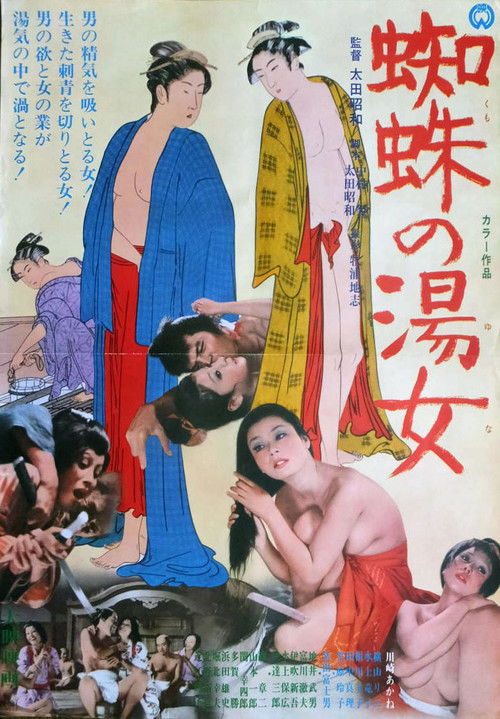
Kumo no Yuna 1971
Set in the early 20th century, Kumo no Yuna (1971) is a poignant drama that delves into the lives of young women navigating societal expectations and personal desires.
Director: Akikazu Ota
Cast










Frequently Asked Questions
What is Kumo no Yuna (1971) about?
This 1971 drama explores the lives of young women navigating societal expectations and personal desires in early 20th-century Japan.
Who directed Kumo no Yuna?
Kumo no Yuna was directed by Akikazu Ota, a skilled filmmaker known for his thoughtful storytelling and nuanced character development.
Who stars in Kumo no Yuna?
The film features a talented cast, including Akane Kawasaki, Rie Yokoyama, and Keiko Aikawa.
Is Kumo no Yuna (1971) worth watching?
With its poignant portrayal of relationships, love, and identity, Kumo no Yuna (1971) is a must-watch for fans of character-driven dramas and historical fiction.
How long is Kumo no Yuna?
Kumo no Yuna has a runtime of 75 minutes.
About Kumo no Yuna (1971) — Unveiling the poignant drama of Japan's past.
Set in the early 20th century, Kumo no Yuna (1971) is a poignant drama that delves into the lives of young women navigating societal expectations and personal desires. Director Akikazu Ota masterfully crafts a narrative that explores the intricacies of relationships, love, and identity. With a talented cast, including Akane Kawasaki and Rie Yokoyama, this film paints a nuanced picture of Japan's past, highlighting the struggles and triumphs of its female characters.
Through its thoughtful storytelling and evocative atmosphere, Kumo no Yuna (1971) invites viewers to immerse themselves in a bygone era, where traditional values and emerging freedoms coexist in a delicate balance. This thoughtful drama is a must-watch for those interested in character-driven stories, historical fiction, and the experiences of women during this pivotal time.
As a lesser-known gem from Japanese cinema, Kumo no Yuna (1971) offers a unique perspective on the country's rich cultural heritage and the lives of its people.