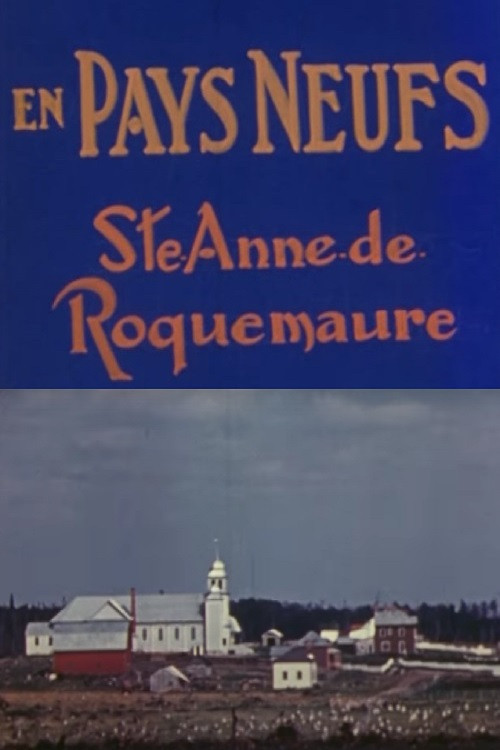
Saint Anne of Roquemaure: An Epilogue to New Countries 1942
Step back to 1942 rural Quebec with Maurice Proulx's short documentary Saint Anne of Roquemaure: An Epilogue to New Countries, a quietly revelatory portrait of life in Ste-Anne-de-Roquemaure.
Director: Maurice Proulx
Frequently Asked Questions
What is Saint Anne of Roquemaure: An Epilogue to New Countries (1942) about?
Maurice Proulx's documentary captures the modest yet transformative changes in Ste-Anne-de-Roquemaure during the early 1940s. From new schools and parish halls to the arrival of a cardinal, the film documents how a rural Quebec community embraces modernization while remaining rooted in tradition.
Who directed Saint Anne of Roquemaure: An Epilogue to New Countries?
The film was directed by Maurice Proulx, a pioneering Québécois filmmaker known for his documentary work that chronicled rural life and regional development in Quebec during the mid-20th century.
Who stars in Saint Anne of Roquemaure: An Epilogue to New Countries?
Cast details for this 1942 documentary are not publicly listed, reflecting the era's focus on collective rather than individual representation.
Is Saint Anne of Roquemaure: An Epilogue to New Countries (1942) worth watching?
As a concise historical document, Saint Anne of Roquemaure offers a rare glimpse into mid-century rural Quebec life, blending cultural insight with Proulx's characteristic observational style. While not a narrative feature, its 20-minute runtime makes it an accessible and informative watch for those interested in Canadian social history.
How long is Saint Anne of Roquemaure: An Epilogue to New Countries?
Saint Anne of Roquemaure: An Epilogue to New Countries runs for 20 minutes.
Saint Anne of Roquemaure: An Epilogue to New Countries (1942) — A Short Film Portrait of Faith and Progress in 1940s Quebec
Step back to 1942 rural Quebec with Maurice Proulx's short documentary Saint Anne of Roquemaure: An Epilogue to New Countries, a quietly revelatory portrait of life in Ste-Anne-de-Roquemaure. As modest landmarks rise—cooperative dairy, parish hall, schoolhouse, post office—Proulx captures the slow pulse of progress sweeping the parish. Families tend vegetable plots, children gather for lessons, and the arrival of Cardinal Villeneuve becomes the village's crowning moment, a snapshot of how faith and modernity shape a tight-knit community. Gentle narration and unhurried footage immerse viewers in a world where the road to the future is paved brick by brick.
This poignant slice of Canadian social history blends everyday labor with collective pride, revealing how collective effort turns necessity into dignity. Proulx's lens lingers on the generosity of the land and the quiet pride of families who, for the first time, glimpse the promise of an automobile. Through luminous black-and-white images, the film transforms routine milestones into timeless testimony, offering a microcosm of mid-century rural transformation that still resonates in our collective memory of place and progress.