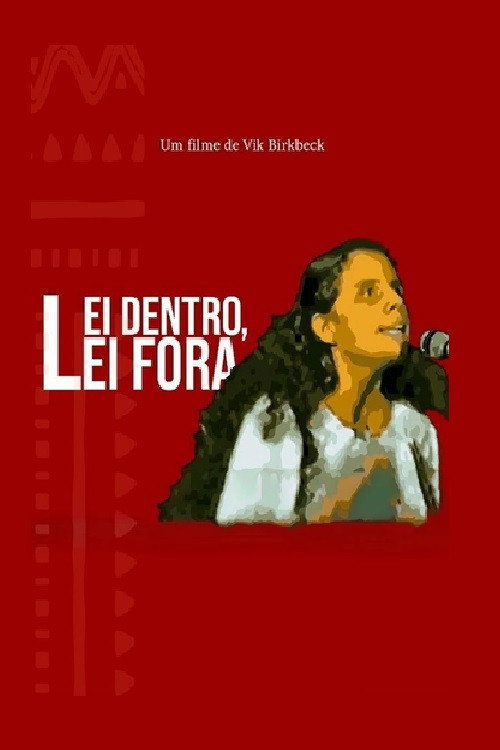
Lei Dentro, Lei Fora 1980
Step into the charged corridors of power with *Lei Dentro, Lei Fora* (1980), Vik Birkbeck's gripping short documentary that pulls back the curtain on a legislative assembly steeped in contradictions.
Director: Vik Birkbeck
Cast
Frequently Asked Questions
What is *Lei Dentro, Lei Fora* (1980) about?
This 19-minute documentary by Vik Birkbeck explores the contradictions within a male-dominated legislative assembly during the 1970s. It centers on deputy Lúcia Arruda, who became a singular female voice in a space defined by aggressive, often physical resistance to her presence and ideas.
Who directed *Lei Dentro, Lei Fora*?
Vik Birkbeck directed *Lei Dentro, Lei Fora* (1980), crafting a concise yet powerful documentary that dissects political culture and gender dynamics.
Who stars in *Lei Dentro, Lei Fora*?
The documentary features deputy Lúcia Arruda as the central figure, with Vik Birkbeck serving as both director and key participant in framing the narrative.
Is *Lei Dentro, Lei Fora* (1980) worth watching?
As a tight, 19-minute documentary, *Lei Dentro, Lei Fora* offers a compelling snapshot of political and gender struggles in a specific historical context. While it's a niche film, its themes of resistance and systemic bias make it a thought-provoking watch for fans of short-form political documentaries.
How long is *Lei Dentro, Lei Fora*?
The runtime of *Lei Dentro, Lei Fora* (1980) is 19 minutes.
🎥 Trailer
Lei Dentro, Lei Fora (1980): A Glimpse Into Political Power and Gender Struggle — Full Movie Info
Step into the charged corridors of power with *Lei Dentro, Lei Fora* (1980), Vik Birkbeck's gripping short documentary that pulls back the curtain on a legislative assembly steeped in contradictions. Shot in the thick of a 1970s-era parliament dominated almost entirely by men, this 19-minute film follows deputy Lúcia Arruda as she navigates a space where respect for life is overshadowed by aggression—verbal, emotional, and at times physical. Birkbeck's lens captures the tension between public duty and entrenched machismo, revealing how one woman's presence exposed the raw disparities of a system claiming to uphold democratic values while resisting female voices. The atmosphere is electric, the stakes personal, and the questions it raises about power, gender, and representation feel as urgent today as they were decades ago.
*Lei Dentro, Lei Fora* isn't just a historical snapshot; it's a sharp commentary on the endurance required to challenge institutional inertia. Birkbeck's documentary doesn't flinch from the hostility Arruda faced, turning the camera on the contradictions of a legislative body that preaches morality while perpetuating inequality. With its tight runtime and unflinching gaze, the film offers a rare glimpse into the birth pangs of gender equality in politics—where every word and gesture carries weight, and silence is complicity. For anyone interested in the intersection of history, power, and personal defiance, this is a resonant and revealing watch.