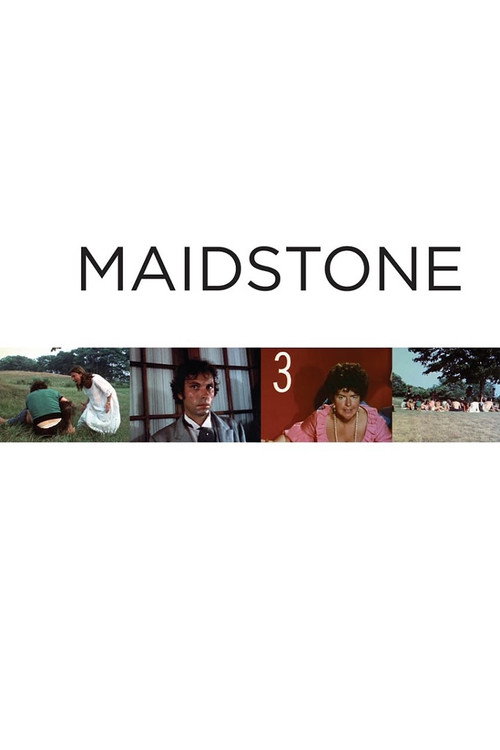
Maidstone 1971
"A Mystery by Norman Mailer"
Norman Mailer's *Maidstone* (1971) is a raw, unfiltered dive into the chaos of creativity and ego, shot over five wild days in East Hampton.
Director: Norman Mailer
Cast




Frequently Asked Questions
What is Maidstone (1971) about?
*Maidstone* follows Norman T. Kingsley, a larger-than-life presidential candidate and filmmaker, as he navigates a weekend of high-stakes debates, power struggles, and personal demons. The line between scripted drama and reality collapses when tensions erupt among the cast and crew, turning the shoot into a real-time battleground of egos and improvisation.
Who directed Maidstone?
The film was directed by Norman Mailer, the Pulitzer Prize-winning author and provocateur who blended literature, politics, and filmmaking into a singular vision.
Who stars in Maidstone?
The cast features Norman Mailer, Rip Torn, Paul Austin, Joy Bang, and Ann Barry in a cast of real-life collaborators and foes.
Is Maidstone (1971) worth watching?
If you love raw, experimental cinema that challenges the conventions of storytelling, *Maidstone* is a fascinating watch. Its improvised intensity and Mailer's bold direction make it a cult favorite, though its chaotic nature isn't for everyone. A must-see for fans of 1970s avant-garde film.
How long is Maidstone?
The film runs 106 minutes (1 hour and 46 minutes).
About Maidstone (1971) — Norman Mailer's wild, improvised cinematic storm
Norman Mailer's *Maidstone* (1971) is a raw, unfiltered dive into the chaos of creativity and ego, shot over five wild days in East Hampton. What began as a fictional drama about a presidential candidate and filmmaker spirals into a surreal exploration of power, paranoia, and artistic control. The film blurs the line between performance and reality, with Mailer himself playing the volatile Norman T. Kingsley, a man unraveling under the weight of his own ambitions. As tensions rise, the cast and crew dissolve into a frenetic, booze-soaked experiment where the boundaries of filmmaking—and sanity—fade away.
This isn't just a drama; it's a cinematic storm where Rip Torn's explosive fourth-wall break becomes a defining moment in film history. *Maidstone* captures the madness of the creative process, where the film's making becomes part of the madness itself. With its documentary-like intensity and unhinged energy, it's a cult classic that feels like an inkblot test for Mailer's subconscious—a frenetic, unforgettable snapshot of an era.