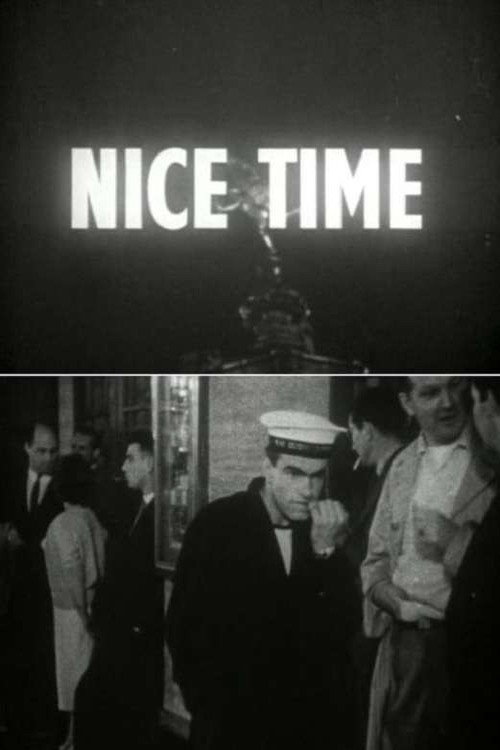
Nice Time 1957
Swiss director Alain Tanner's *Nice Time (1957)* captures the pulsating energy of Piccadilly Circus as daylight fades and the city awakens.
Director: Alain Tanner
Frequently Asked Questions
What is Nice Time (1957) about?
*Nice Time* is a 17-minute documentary that documents the transformation of Piccadilly Circus as day turns to night. The film uses montage to contrast the quiet of early evening with the bustling energy of late-night crowds, creating a poetic study of urban life.
Who directed Nice Time?
Alain Tanner directed *Nice Time (1957)*. This early work showcases his knack for capturing fleeting moments with visual elegance.
Who stars in Nice Time?
Cast details for *Nice Time* are not publicly listed, as it's a documentary without credited performers.
Is Nice Time (1957) worth watching?
*Nice Time* is a fascinating time capsule for film enthusiasts and history buffs. Its 17-minute runtime and artistic approach make it a unique, if niche, experience—best appreciated for its visual storytelling rather than traditional narrative.
How long is Nice Time?
The runtime of *Nice Time* is 17 minutes.
About Nice Time (1957) — A Stylish 1950s Snapshot of London Nightlife
Swiss director Alain Tanner's *Nice Time (1957)* captures the pulsating energy of Piccadilly Circus as daylight fades and the city awakens. Through a hypnotic montage of black-and-white footage, the short documentary traces the ebb and flow of nightlife, from the early evening's hustle to the quiet moments before dawn. Tanner's lens lingers on neon signs, crowds, and solitary figures, weaving a poetic portrait of urban solitude and communal vibrancy. The film's minimalist approach and rhythmic editing evoke a dreamlike atmosphere, where every shadow and light tells a story.
Shot in just 17 minutes, *Nice Time* is a masterclass in observational filmmaking. It's a time capsule of mid-century London, preserving the raw charm of a city that never sleeps. Whether you're drawn to its historical appeal or its artistic merits, the film offers a mesmerizing glimpse into an era where cinema still felt like an experiment in seeing the world differently.