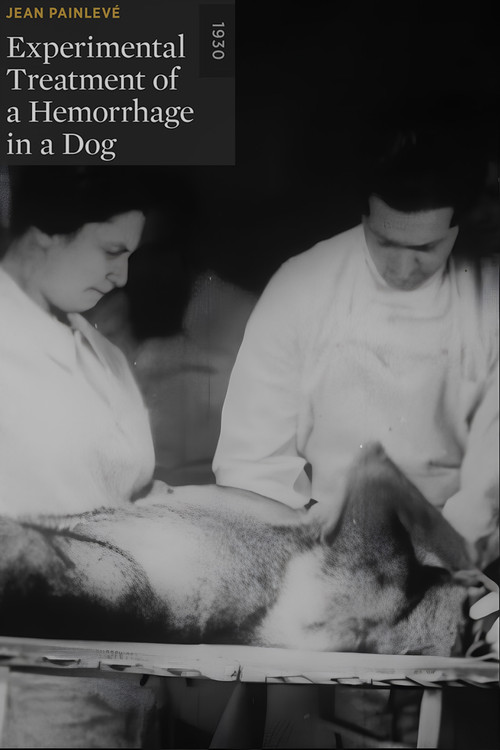
Experimental Treatment of a Hemorrhage in a Dog 1930
Dive into the fascinating world of early medical cinema with *Experimental Treatment of a Hemorrhage in a Dog* (1930), a concise yet impactful documentary directed by visionary filmmaker Jean Painlevé.
Director: Jean Painlevé
Frequently Asked Questions
What is *Experimental Treatment of a Hemorrhage in a Dog* (1930) about?
This short documentary by Jean Painlevé documents an experimental surgical procedure on a dog suffering from a hemorrhage, offering a stark look at early veterinary medicine and the ethical considerations of scientific experimentation.
Who directed *Experimental Treatment of a Hemorrhage in a Dog*?
The film was directed by French filmmaker and biologist Jean Painlevé, renowned for his contributions to scientific and documentary cinema.
Who stars in *Experimental Treatment of a Hemorrhage in a Dog*?
The cast details for this short film are not listed, as it primarily features the subject of the procedure rather than actors.
Is *Experimental Treatment of a Hemorrhage in a Dog* (1930) worth watching?
While the film is undeniably brief, it offers a fascinating historical snapshot of veterinary science and early experimental techniques. Its documentary value and Painlevé's distinctive approach make it a niche but intriguing watch for fans of early cinema and medical history.
How long is *Experimental Treatment of a Hemorrhage in a Dog*?
The runtime is approximately 4 minutes, making it a quick yet impactful viewing experience.
Experimental Treatment of a Hemorrhage in a Dog (1930): The Unflinching Science of a Pioneering Short Film
Dive into the fascinating world of early medical cinema with *Experimental Treatment of a Hemorrhage in a Dog* (1930), a concise yet impactful documentary directed by visionary filmmaker Jean Painlevé. This four-minute short captures the raw intensity of a pioneering canine surgery, offering a rare glimpse into the evolution of veterinary medicine during the early 20th century. The film blends clinical precision with an almost hypnotic atmosphere, immersing viewers in a time when experimental procedures were pushing the boundaries of what was possible. Its stark, unflinching portrayal of medical intervention invites reflection on the intersection of science, ethics, and animal welfare, making it a compelling watch for history and medicine enthusiasts alike.
Jean Painlevé, known for his innovative approach to scientific filmmaking, crafts a visual narrative that is as educational as it is haunting. The documentary's focus on a controlled hemorrhage treatment highlights the dedication of early researchers and the often unheralded progress they achieved in veterinary science. While the cast remains uncredited, the film's power lies in its subject matter and Painlevé's distinctive directorial vision, leaving audiences with a sense of awe for the pioneering spirit of medical experimentation in the 1930s.