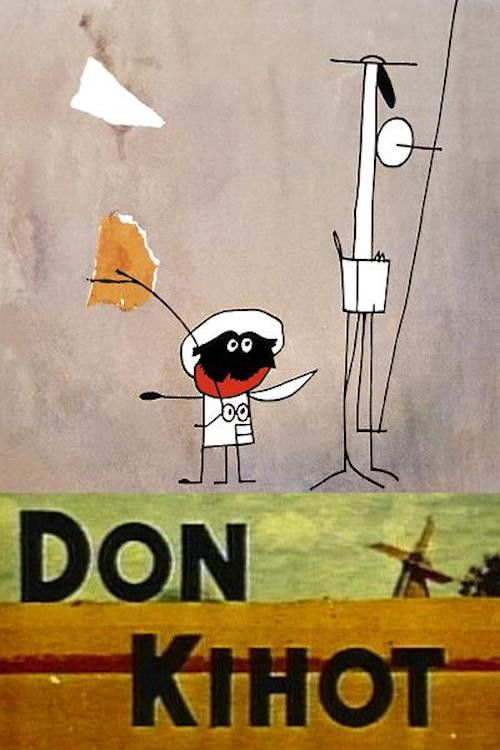
Don Quixote 1962
Don Quixote (1962) is a distinctive animated short that reimagines Cervantes' timeless character through a modern lens.
Director: Vlado Kristl
Frequently Asked Questions
What is Don Quixote (1962) about?
This animated short reinterprets the classic literary character in a contemporary setting, exploring themes of idealism and reality through satirical visuals. The film presents Don Quixote's journey as a meditation on how dreams clash with a militaristic, regimented society.
Who directed Don Quixote?
Vlado Kristl directed this 1962 animated short, bringing his distinctive artistic vision to the classic story through innovative animation techniques.
Who stars in Don Quixote?
Cast information for Don Quixote (1962) is currently unavailable.
Is Don Quixote (1962) worth watching?
Despite its brief runtime, this unrated animation offers a unique artistic experience for fans of experimental cinema. The film's unconventional approach to the classic story makes it a compelling choice for viewers interested in avant-garde animation.
How long is Don Quixote?
Don Quixote (1962) runs for 10 minutes.
About Don Quixote (1962) — Avant-Garde Animation Meets Literary Satire
Don Quixote (1962) is a distinctive animated short that reimagines Cervantes' timeless character through a modern lens. Directed by Vlado Kristl, this ten-minute film transforms the classic tale into a satirical commentary on contemporary society, blending Paul Klee's artistic sensibilities with sharp social critique. The animation style reflects the militaristic and regimented world the protagonist inhabits, creating a visually striking meditation on idealism versus reality.
This unconventional adaptation strips away traditional narrative elements to focus on atmosphere and symbolism. The short format allows Kristl to distill the essence of Don Quixote's struggle into a concentrated visual experience that challenges viewers' expectations. Though brief, the film leaves a lasting impression through its unique artistic vision and thought-provoking themes.
Animation enthusiasts and fans of experimental cinema will appreciate this avant-garde interpretation that bridges classical literature with modernist animation techniques. The film's brevity makes it accessible for multiple viewings, revealing new layers of meaning with each watch.