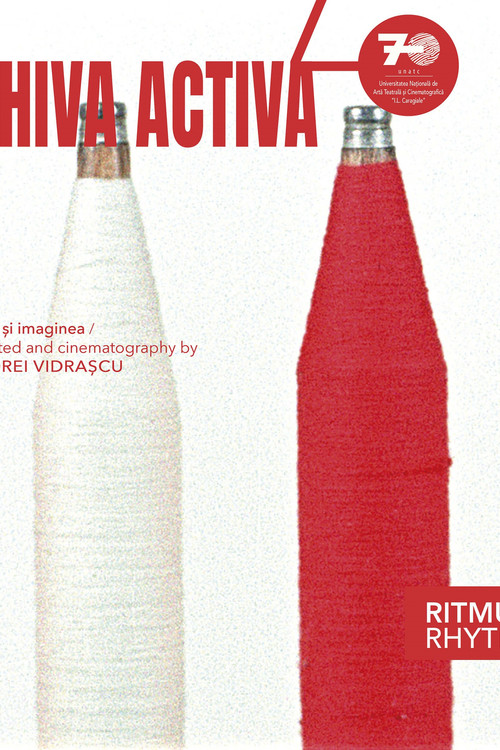
Rhythms 1970
A fleeting yet mesmerizing slice of Romanian cinema, *Rhythms (1970)* by Andrei Vidrașcu condenses abstract art into a four-minute sensory experience.
Director: Andrei Vidrașcu
Frequently Asked Questions
What is *Rhythms (1970)* about?
This four-minute short transforms everyday objects into a swirling kaleidoscope of colors and shifting textures, devoid of dialogue or plot. It's less a story and more a visual symphony, inviting viewers to experience cinema as pure sensory abstraction.
Who directed *Rhythms*?
Director information is not available.
Who stars in *Rhythms*?
Cast details for *Rhythms (1970)* are not listed.
Is *Rhythms (1970)* worth watching?
While not a mainstream title, *Rhythms* offers a unique glimpse into Romanian experimental cinema. Its abstract nature may not appeal to everyone, but it's a fascinating study in visual rhythm and color for fans of avant-garde filmmaking.
How long is *Rhythms*?
*Rhythms* runs for 4 minutes.
Rhythms (1970): A Romanian Abstract Short Film — Full Info & Legacy
A fleeting yet mesmerizing slice of Romanian cinema, *Rhythms (1970)* by Andrei Vidrașcu condenses abstract art into a four-minute sensory experience. The film strips away narrative in favor of pure visual rhythm, transforming ordinary objects into cascading hues, dynamic shapes, and fluid substances that dissolve and re-form like liquid dreams. Without dialogue or traditional structure, it invites viewers into a hypnotic dance of light and perception, where texture and movement take center stage. This experimental gem stands as one of Romania's rare forays into non-representational cinema, offering a quiet rebellion against conventional storytelling.
Set against the backdrop of early 1970s experimental filmmaking, *Rhythms (1970)* feels both timeless and deeply rooted in its era. Its abstract language speaks to the power of cinema as a medium of pure sensation, appealing to those drawn to avant-garde visuals and the emotive potential of color theory. Whether it's a meditation on perception or simply a bold artistic statement, the film lingers like a vivid memory, leaving audiences to ponder the boundaries between object and abstraction.