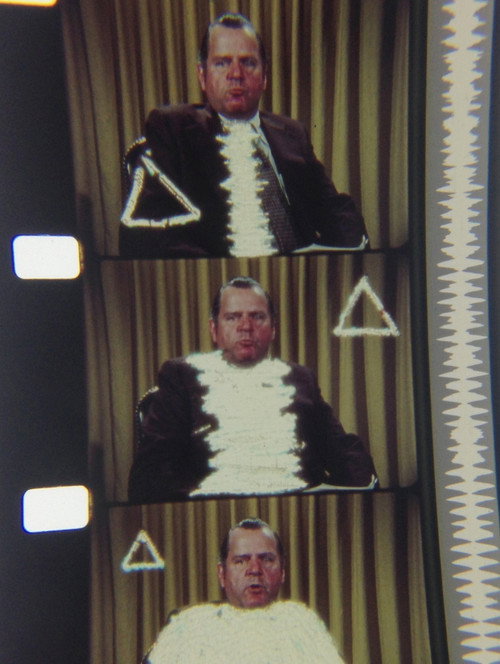
The Scratchman 1980
In this hypnotic three-minute experimental short from 1980, director Heather McAdams weaves a mesmerizing visual pattern around a military spokesperson's remarks.
Director: Heather McAdams
Frequently Asked Questions
What is The Scratchman (1980) about?
This experimental short uses animated scratches and patterns to frame a military spokesperson's speech. The visuals distort the spoken word, turning a mundane address into an unsettling exploration of media and perception.
Who directed The Scratchman?
Heather McAdams directed The Scratchman in 1980, crafting a visually arresting piece that merges animation with found footage.
Who stars in The Scratchman?
The film features an unnamed military spokesperson as its sole on-screen presence, with no credited cast listed.
Is The Scratchman (1980) worth watching?
As a three-minute avant-garde experiment, The Scratchman offers an intriguing snapshot of 1980s experimental filmmaking. Its unconventional approach and eerie atmosphere make it a niche pick, best suited for those curious about abstract animation and media critique.
How long is The Scratchman?
The Scratchman runs for exactly 3 minutes.
About The Scratchman (1980) — Three Minutes of Haunting Animation You Won't Forget
In this hypnotic three-minute experimental short from 1980, director Heather McAdams weaves a mesmerizing visual pattern around a military spokesperson's remarks. Abstract lines and geometric shapes dance across the screen, creating an eerie, almost subliminal backdrop that contrasts sharply with the spoken words. The film blends minimalist animation with a surreal edge, transforming dry official footage into an unsettling meditation on media manipulation and perception. The scratch-like marks drift like ghostly annotations, leaving viewers to question the truth behind every syllable.
Though brief, The Scratchman (1980) lingers in the mind long after the credits roll. Its stark visual language and thematic tension between image and authority make it a cult curiosity for fans of avant-garde cinema. The piece thrives on ambiguity, inviting audiences to read between the lines—or scratches—of its fleeting narrative.