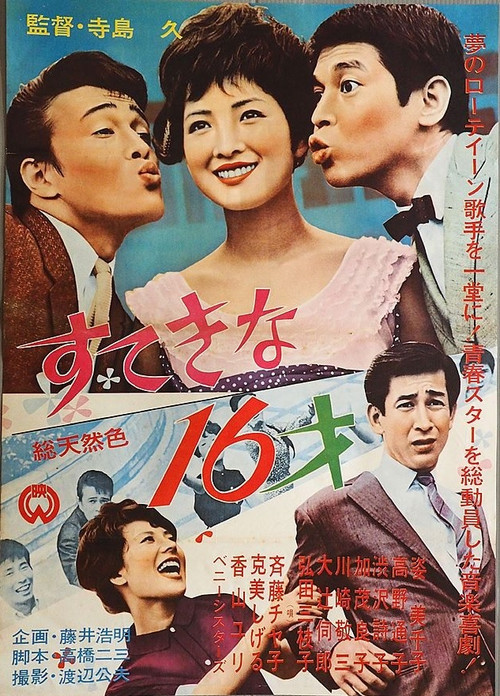
Sutekina 16-sai 1962
Sutekina 16-sai (1962), a lesser-known gem from the early '60s Japanese cinema, captures the bittersweet essence of youth and first love against the backdrop of post-war Japan.
Director: Hisashi Terajima
Cast




Frequently Asked Questions
What is Sutekina 16-sai (1962) about?
This 1962 Japanese film follows a 16-year-old protagonist navigating the challenges of adolescence, first love, and societal expectations in post-war Japan. The story unfolds with quiet intimacy, highlighting the bittersweet transition from childhood to adulthood.
Who directed Sutekina 16-sai?
The film was directed by Hisashi Terajima, known for his thoughtful and character-driven approach to storytelling in early Japanese cinema.
Who stars in Sutekina 16-sai?
The main cast includes Keizō Kawasaki, Michiko Sugata, and Tamae Kiyokawa, with standout performances that bring depth to the film's emotional core.
Is Sutekina 16-sai (1962) worth watching?
While not widely celebrated today, Sutekina 16-sai offers a charming and reflective snapshot of 1960s Japanese life. Fans of slow-burn dramas and nostalgic coming-of-age stories may find its tender themes compelling, even if it lacks mainstream recognition.
How long is Sutekina 16-sai?
The runtime for Sutekina 16-sai (1962) is 85 minutes.
Sutekina 16-sai (1962) — A Poignant 1960s Japanese Drama About Youth and First Love
Sutekina 16-sai (1962), a lesser-known gem from the early '60s Japanese cinema, captures the bittersweet essence of youth and first love against the backdrop of post-war Japan. Directed by Hisashi Terajima, this 85-minute drama weaves a tender narrative that lingers on the fleeting moments of adolescence. The film's atmosphere is both nostalgic and melancholic, exploring the struggles of growing up in a rapidly changing society. Keizō Kawasaki shines as the protagonist, navigating the complexities of love and responsibility, while Michiko Sugata and Tamae Kiyokawa deliver heartfelt performances that anchor the story. Though the genre isn't explicitly listed, Sutekina 16-sai feels like a poignant slice-of-life tale that resonates with anyone who remembers the intensity of their teenage years.
At its core, Sutekina 16-sai (1962) reflects the universal yearning for connection and belonging, set within the constraints of a society enforcing rigid norms. Terajima's direction emphasizes quiet intimacy, allowing the characters' inner lives to unfold naturally. The film's visual style, though likely modest by today's standards, carries the warmth of a lived-in story, where every glance and gesture feels significant. For viewers seeking a reflective, character-driven film, this 1962 Japanese classic offers a charming yet poignant escape into the past.