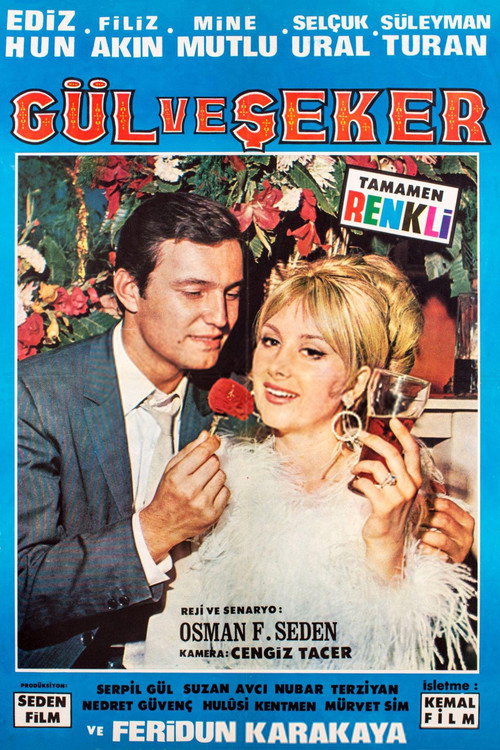
Gül ve Şeker 1968
Set in the vibrant city of Istanbul, Gül ve Şeker (1968) is a timeless Romance-Comedy that whisks viewers away to a world of deception and love. Directed by the masterful Osman F.
Director: Osman F. Seden
Cast










Frequently Asked Questions
What is Gül ve Şeker (1968) about?
The film tells the story of two young people who must hide their true identities to be together, set against the vibrant backdrop of Istanbul.
Who directed Gül ve Şeker?
The masterful Osman F. Seden brings his unique vision to this timeless Romance-Comedy.
Who stars in Gül ve Şeker?
The talented cast includes Ediz Hun, Filiz Akın, and Feridun Karakaya.
Is Gül ve Şeker (1968) worth watching?
While the IMDb rating is unrated, the film's lighthearted atmosphere and themes of love and identity make it a must-watch for fans of Romance and Comedy.
How long is Gül ve Şeker?
The film has a runtime of 65 minutes.
About Gül ve Şeker (1968) — A Heartwarming Tale of Love and Deception
Set in the vibrant city of Istanbul, Gül ve Şeker (1968) is a timeless Romance-Comedy that whisks viewers away to a world of deception and love. Directed by the masterful Osman F. Seden, this film tells the enchanting tale of two young people who must hide their true identities to be together. As Ömer, an engineer in dire need of funds, takes on his brother's place in a marriage of convenience, the lines between reality and fantasy begin to blur. Meanwhile, Filiz, a young woman forced into a union against her will, finds solace in a clever disguise. With its lighthearted atmosphere and themes of love and identity, Gül ve Şeker is a cinematic treat that will leave you smiling long after the credits roll.
As the story unfolds, the complexities of relationships and the human condition are expertly woven into a narrative that is both humorous and heartwarming. With a talented cast, including Ediz Hun and Filiz Akın, the film is a must-watch for fans of Romance and Comedy. So, grab some popcorn and immerse yourself in the delightful world of Gül ve Şeker (1968).