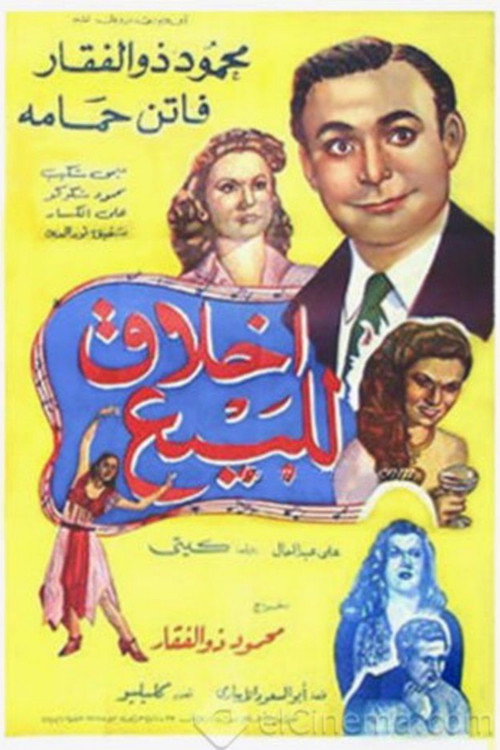
Ethics for Sale 1950
In *Ethics for Sale (1950)*, Mahmoud Zulfiqar crafts a whimsical yet insightful drama-comedy that blends satire with family dynamics.
Director: Mahmoud Zulfiqar
Cast






Frequently Asked Questions
What is Ethics for Sale (1950) about?
The film centers on a husband trapped in a daily battle with his domineering mother-in-law. Desperate for change, he stumbles upon a peddler selling bottled virtues, leading to a series of comedic and transformative events that challenge his perceptions of right and wrong.
Who directed Ethics for Sale?
Mahmoud Zulfiqar both directed and starred in *Ethics for Sale*, bringing a personal touch to this satirical family drama.
Who stars in Ethics for Sale?
The film features Mahmoud Zulfiqar, Faten Hamama, Mimi Chakib, Mahmoud Shoukoko, and Ali AlKassar, with Shafiq Nour ElDein rounding out the cast.
Is Ethics for Sale (1950) worth watching?
For fans of mid-century comedies with substance, *Ethics for Sale* offers a delightful mix of humor and social commentary. While IMDb ratings aren't available, its inventive premise and strong performances make it a worthwhile watch for those who enjoy lighthearted yet thought-provoking cinema.
How long is Ethics for Sale?
Ethics for Sale runs for 105 minutes.
About Ethics for Sale (1950) — A Husband's Moral Adventure with a Powdered Twist
In *Ethics for Sale (1950)*, Mahmoud Zulfiqar crafts a whimsical yet insightful drama-comedy that blends satire with family dynamics. Directed by and starring Zulfiqar himself, the film follows a beleaguered husband whose life spirals under the weight of his overbearing mother-in-law. His fortunes shift when he encounters a mysterious man peddling moral virtues in powdered form, offering a playful yet biting commentary on personal growth and societal expectations. With Faten Hamama adding charm to the ensemble, the story oscillates between lighthearted humor and thoughtful reflection on integrity and human behavior.
Set against mid-century Egypt, *Ethics for Sale* balances farce with social critique, exploring themes of authority, conformity, and the absurdity of moral shortcuts. The film's airy tone belies its sharp observations about authority figures and the lengths people go to avoid conflict. Shot in a warm, golden-toned palette, it evokes nostalgia while remaining timeless in its universal struggles, making it a standout in 1950s Egyptian cinema.